


News
Repair vs replacement costs for UK smartphones
TL;DR:
- Many UK smartphone owners make costly mistakes by immediately replacing their devices after a single repair quote without considering repair costs and device value. Understanding factors like cumulative repair expenses, device age, and remaining software support helps determine whether repair or replacement is more economical long-term. Planning device lifecycle management and sourcing quality parts can maximize value and reduce operational risks for individuals and businesses alike.
Getting a single repair quote and immediately ordering a new phone is one of the most expensive mistakes a UK smartphone owner can make. The average UK consumer replaces their device every two to three years, but many replacements happen far sooner, driven by an inflated repair quote and the assumption that buying new is the cleaner option. What most people miss is the full picture: the phone’s current trade-in or second-hand value, the history of repairs already paid for, the parts quality on offer, and what the device will actually cost to run over its remaining useful life. This guide gives you the evidence-based framework to make that call confidently, whether you manage your own handset or a fleet of devices for a small business.
Table of Contents
- Understanding repair costs for UK smartphones
- When does replacement make more sense?
- Beyond numbers: factors influencing your decision
- Maximising value from repairs: what most miss
- The reality: why most UK phone owners pay more than they should
- Get quality repairs and parts for less
- Frequently asked questions
Key Takeaways
| Point | Details |
|---|---|
| Calculate cumulative costs | Add up all recent repair expenses to compare properly with replacement value. |
| Apply the 50% rule | If a single repair costs more than half of your phone’s current value, replacement is usually wiser. |
| Assess device age and updates | Phones too old for security updates or hit by repeat failures are best replaced. |
| Quality parts matter | Investing in genuine or reliable compatible parts helps avoid repeat breakdowns and extra costs. |
| Diagnostics save money | Getting all faults diagnosed at once prevents hidden costs and unnecessary repeat repairs. |
Understanding repair costs for UK smartphones
With the value of better decision-making established, the next step is understanding the real costs of repairs over time. A single repair bill rarely tells the whole story.
Common UK smartphone repair costs vary significantly by fault type, brand, and repair provider. To put it in concrete terms, here are typical price ranges you will encounter:
| Repair type | Budget/compatible parts | Genuine/OEM parts | Independent shop |
|---|---|---|---|
| Screen replacement (mid-range Android) | £40–£80 | £80–£140 | £60–£120 |
| Screen replacement (iPhone 14 Pro) | £100–£150 | £180–£280 | £140–£220 |
| Battery replacement | £20–£45 | £50–£90 | £35–£70 |
| Charging port repair | £25–£55 | £60–£100 | £40–£80 |
| Water damage assessment and repair | £50–£120 | £100–£200+ | £60–£150 |
UK repair pricing for common smartphone tasks can be a significant fraction of replacement pricing, particularly for premium handsets where even a battery swap from an authorised repairer can top £90. These numbers matter because of how they compound.
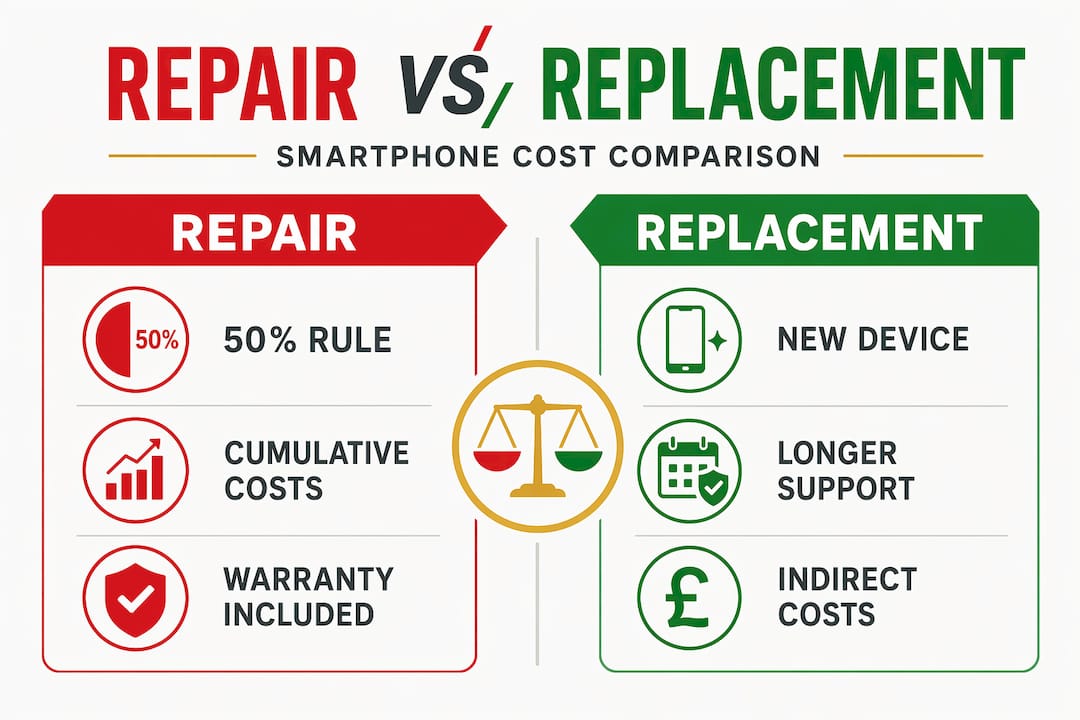
A useful practice is tracking your cumulative repair spend. Experts recommend adding up repair costs over the past two years and comparing the total against the phone’s current replacement cost. If you spent £55 on a battery last year and now face a £120 screen repair, you are already at £175 for a device that may only be worth £200 on the second-hand market. That context changes the calculation entirely.
Key facts to keep in mind when assessing repair costs:
- Screen repairs are often the most visible cost but rarely the only damage after a drop.
- Battery degradation is predictable, so factor in a replacement if the phone is over two years old.
- Water damage costs are highly variable and often incomplete, because corrosion progresses after the initial repair.
- Charging port faults are frequently a symptom of wider board damage, not a standalone issue.
- Saving money on a cracked screen starts with understanding what is actually broken, not just what is visibly damaged.
Pro Tip: Always get a written, itemised quote before authorising any repair, and keep a simple log of every repair you pay for. A spreadsheet noting the date, fault, cost, and parts type takes five minutes and can save you hundreds over the device’s lifetime.
The widely cited 50% rule is a practical starting point: if a repair will cost more than half the phone’s current replacement value, replacement is usually the wiser choice. Note that “replacement value” here means what you could actually buy a comparable used or refurbished model for today, not the original retail price.

When does replacement make more sense?
Having grasped repair pricing, the next logical question is: when does replacing simply win out? The answer is more nuanced than a single repair quote can tell you.
There are clear-cut situations where replacement is the financially and practically sounder move:
- Security updates have ended. If your device no longer receives operating system or security patches, every day you keep it in use represents a security risk. For business owners especially, an unpatched phone handling company email or payment apps is a liability.
- Multiple component failures occur together. A cracked screen combined with a faulty battery and a damaged charging port means you are looking at cumulative repair costs that typically exceed 60 to 80% of replacement value.
- Serious liquid or water damage is present. Even after a professional clean, water-damaged phones can suffer progressive corrosion that causes failures weeks or months later.
- Parts are no longer available. Older models, particularly budget Android handsets, eventually lose parts supply. Repairs become speculative.
- The phone has a poor repair history. A handset that has already had its screen, battery, and charging port replaced in 18 months is statistically far more likely to suffer additional failures.
“Even if an individual repair seems to fall under the 50% threshold, edge cases involving end-of-software-support or severe accumulated damage can make replacement the right call far sooner than the numbers suggest.”
Here is a comparison that makes the trade-off clearer for common scenarios:
| Scenario | Repair cost estimate | Refurbished replacement cost | Recommended action |
|---|---|---|---|
| iPhone 12, cracked screen only | £140 | £220–£260 | Repair (under 50%) |
| Samsung Galaxy A52, screen + battery | £110 | £130–£160 | Replace |
| iPhone SE 2020, charging port only | £45 | £140–£180 | Repair |
| Huawei P30 (no updates), screen crack | £90 | £100–£140 | Replace |
| iPhone 14, water damage | £130–£200+ | £480–£550 | Assess with diagnostics first |
The risk areas most people overlook are the indirect costs. When your phone is away for repair, you may need a temporary handset. For business users, that could mean lost productivity. For someone relying on mobile banking or two-factor authentication, even a two-day turnaround is disruptive. Factor that into the true cost of repair. Replacement parts tips can help you understand what a quality repair actually involves before you hand the device over.
Beyond numbers: factors influencing your decision
The repair vs replacement debate is not just about hard numbers. Context matters enormously, and several factors can shift the right answer in ways that a simple cost comparison does not capture.
Device age and the software support lifecycle are perhaps the most underestimated factors. A phone that is four years old and still functioning well mechanically may already be within one or two years of losing operating system support from the manufacturer. Repairing it today could mean investing £100 in a device that becomes a security risk within 18 months. For business owners managing even a handful of staff handsets, that risk is multiplied.
The risk of cascading failures is the second factor worth serious attention. When one major component fails, it often signals broader stress on the device. Drops that crack a screen frequently damage internal connectors or the battery. Choosing reliable parts helps reduce the risk of compounding issues, but it does not eliminate the underlying problem of a device that has suffered structural damage.
Cumulative repair risk works differently from cumulative repair cost. Even if previous repairs were inexpensive, each repair introduces a degree of risk: re-sealed components may not achieve the original IP water-resistance rating, replaced screens may not match the original colour calibration or touch sensitivity, and technician error, however rare, is always a possibility. Three repairs in two years means three windows of introduced risk.
Factors to weigh beyond the invoice:
- Does the device still receive critical security updates from the manufacturer?
- Has the phone been repaired more than twice in the past 18 months?
- Are genuine phone parts available for this model, or will the repairer use compatible alternatives?
- Is the device used for sensitive business tasks where security vulnerabilities are a direct financial risk?
- How much productive time is lost during the repair period?
Pro Tip: Before authorising any repair on a phone over two years old, check the manufacturer’s published support end-date for that model. Apple, Samsung, and Google all publish this information. If support ends within 12 months, reconsider the repair investment entirely.
The 50% rule is a starting point, but adjust it for device history, age, remaining update support, and the realistic risk of further failures. A phone with a clean history at 40% of replacement cost is a far better repair candidate than a battered device at 45% with a poor track record.
Maximising value from repairs: what most miss
With a full view of context and risks, it is time to ensure you are maximising value if you do choose repair. Most people focus on the price of the part or the labour charge. The most experienced repair buyers look at something different.
Diagnostics before repair is the step that most UK repair shops skip to close the sale quickly. A proper diagnostic assessment identifies all faults present, not just the visible one. Paying £20 to £40 for a full diagnostic upfront can prevent you from paying for a screen replacement only to discover, a week later, that the earpiece, front camera, or proximity sensor are also damaged. Reputable shops offer this; the ones that do not are often optimising for quick turnover, not customer outcomes.
Genuine versus compatible parts is the most consequential choice in any repair. Compatible parts are often significantly cheaper, and for many repairs, they perform perfectly well. However, for flagship devices like the iPhone screen repairs, using non-genuine screens can affect True Tone calibration, brightness accuracy, and in some cases trigger software warnings. For Samsung Galaxy flagships, non-genuine AMOLED panels frequently show colour shifts within months.
“The economics of flagship screen repairs shift significantly when you account for diagnostics, parts sourcing quality, and the impact on water-sealing integrity. A cheap repair that compromises the gasket seal can void any remaining protection against liquid ingress.”
Key considerations when choosing where and how to repair:
- Ask explicitly whether parts are OEM, manufacturer-certified, or compatible aftermarket.
- Check whether the repair shop offers any warranty on parts and labour, and what it covers.
- For screen repair cost savings that actually last, prioritise parts with a minimum six-month warranty over the cheapest available option.
- If you are considering a DIY approach, a DIY screen repair kit with clear instructions and quality parts can genuinely cut costs while giving you control over parts quality.
- Review detailed screen cost guidance before accepting any quote, so you know the realistic range for your specific model.
One often-missed factor is warranty on the repair itself. A reputable repair with a 90-day or 12-month warranty is worth paying a modest premium for. No warranty means you absorb the full cost of any failure in the repaired component, even if it is a parts defect rather than user error.
The reality: why most UK phone owners pay more than they should
Here is a candid view of what the repair and replacement industry rarely tells you directly. Most UK users, and the majority of small business owners we speak with, arrive at the repair-versus-replace decision with incomplete information. They have one quote, no record of previous repairs, and no knowledge of the parts being used. They either accept the quote unchallenged or panic-buy a replacement they did not need.
The shop quoting for the repair has no financial incentive to tell you that three previous repairs make this device a poor candidate for further investment. The network or retailer offering an upgrade deal has every incentive to make replacement feel inevitable. Neither party is going to volunteer the full cost of ownership analysis you actually need.
What experienced buyers do differently is treat every repair decision as a short audit. They know their total repair spend for the past 24 months. They know the current second-hand value of their device. They ask specifically what grade of parts will be used and demand a written warranty. They check the manufacturer’s update support timeline before committing a penny.
For small businesses, the stakes are higher. A fleet of unmanaged, ageing handsets with inconsistent repair histories is a compliance and security risk, not just a budget issue. Investing in finding quality replacement parts from a reliable source, or setting a clear device replacement cycle, saves money and reduces operational risk over time.
The uncomfortable truth is that “quick fixes” rarely represent the best value when you account for parts quality, warranty absence, missed secondary damage, and the cumulative repair trajectory. Planning for the device lifecycle from the moment of purchase, including a realistic repair budget and a defined replacement trigger, is the approach that consistently delivers better outcomes.
Get quality repairs and parts for less
Now that you know how to approach repair versus replacement, making your next smart choice is straightforward with the right supplier. At Buy2fix, we stock genuine and high-quality compatible parts for iPhone, Samsung Galaxy, Huawei, Xiaomi, OPPO, and many other major brands, all quality-checked before dispatch. Whether you are a DIY enthusiast replacing your own screen or a repair technician sourcing parts for multiple devices, you will find fair pricing, clear product descriptions, and warranty support on eligible items. We offer free UK mainland shipping and a 30-day return policy, so you can buy with confidence. Browse our full range and get the parts you need to repair smarter, not just faster.
Frequently asked questions
What is the 50% rule for phone repairs?
The 50% rule suggests that if a repair will cost more than half the phone’s current replacement value, you should usually replace the device instead of repairing it.
Should I consider cumulative repair costs?
Yes. Adding up all repair costs from the past two years often reveals that repeated expenses make replacement the cheaper long-term option, even when individual repairs seemed reasonable at the time.
When is replacement always better than repair?
Replacement is the stronger choice when your device no longer receives security updates, has sustained multiple serious faults, or has suffered significant water damage with a risk of ongoing corrosion.
Are DIY repairs a good way to save money?
DIY repairs can cut costs meaningfully, but the savings are only real if you use quality parts with a warranty and follow proper repair guidance for your specific model.
Does phone age affect repair vs replacement cost-effectiveness?
Yes. Older phones with limited remaining software update support carry a higher risk of future faults and security vulnerabilities, which makes replacement more cost-effective sooner than the basic numbers suggest.
Recommended
Let customers speak for us
I ❤️ love it, it's absolutely amazing I'm sooo happy 😊

Great

I saw this item and it was just what I was looking for. I found it here but not in Amazon or e-bay. However, it was in UK, I was surprised to find that they were able to ship it to the US. Excellent company, would do business with again

This is great for when out and about, to sharpen either coloured pencils, or watercolour pencils….would order again.

Great items would bye again

I have purchased several items from this store before. Recently, I encountered an issue with my latest order. After reporting the problem to customer support, they were consistently attentive and made every effort to resolve the situation. Upon investigation, they acknowledged the issue and promptly fixed it. This experience has increased my level of trust in this store.
Thank you so much. I'm so happy.

très bien

BC70 Car Bluetooth 5.0 FM Transmitter Radio Adapter Dual Display Wireless Handsfree Call MP3 Music Player QC3.0 PD USB Charger

A quite sturdy cover, if you are looking for full protection and a more business-like style, this cover perfectly fulfills its purpose.
The shipping was fast, and it was delivered in perfect condition.

For LG TV Bluetooth Handheld Infrared Voice Multi-Function Remote Control(AKB75855501)

Tusen tack för bästa service och produkt som jag vänlig önskar dig tack

Works correctly and no issues so far

Took a while to get here but it was all good, watch looks brand new after replacement

What a fantastic 👏🏻 stylish case that has helped my phones temperature in the heatwave!!
Perfect 👌🏻 also it's cool as f##k
