

Phone screen repair costs in the UK: Save more in 2026
TL;DR:
- Repair costs vary significantly based on device, part quality, and repair method, from £20 to over £389.
- Independent shops offer high-quality repairs at 30–60% lower prices with quick turnaround times compared to official centres.
- DIY repair is cost-effective for older phones but carries risks and often voids warranties.
The price gap between getting your phone screen fixed at an official brand centre versus a local independent shop can genuinely shock you. Professional screen repair costs range from under £50 for a budget Android to well over £350 for a flagship iPhone at an authorised centre. That’s a massive spread, and most people simply pay whatever they’re quoted without realising there are smarter, equally reliable options available. This guide cuts through the confusion, giving you evidence-backed comparisons between official centres, independent shops, and DIY kits, so you can make a confident, cost-effective decision for your specific device and budget.
Table of Contents
- What determines the cost of phone screen repair?
- Official repair centres vs local shops: How do costs and results compare?
- Should you try a DIY phone screen repair?
- Deciding on the best value option for your screen repair
- A practical perspective: What most UK phone owners miss about screen repair value
- Save on quality UK phone repairs and DIY parts now
- Frequently asked questions
Key Takeaways
| Point | Details |
|---|---|
| Repair costs vary greatly | Official centres charge up to £389, but local shops and DIY can halve the bill. |
| Quality matters more than price | Choosing reputable independents or quality kits preserves screen brightness and touchscreen life. |
| DIY has benefits and hidden risks | Do it yourself only when confident and for minor cracks; major damage is best left to the pros. |
| Best value is case-dependent | Compare repair cost, phone value, and shop reputation before deciding on repair or replacement. |
What determines the cost of phone screen repair?
Having set the stage for price confusion, let’s break down what’s really behind different repair costs. Three main factors drive what you’ll pay: the device brand and model, the quality of the replacement part, and the method of repair.
Device brand and model matters enormously. A Samsung Galaxy A15 screen costs a fraction of what an iPhone 15 Pro Max display does, simply because of parts availability and manufacturing complexity. OLED screens, found in most flagship phones, cost significantly more to produce than LCD panels used in budget handsets.
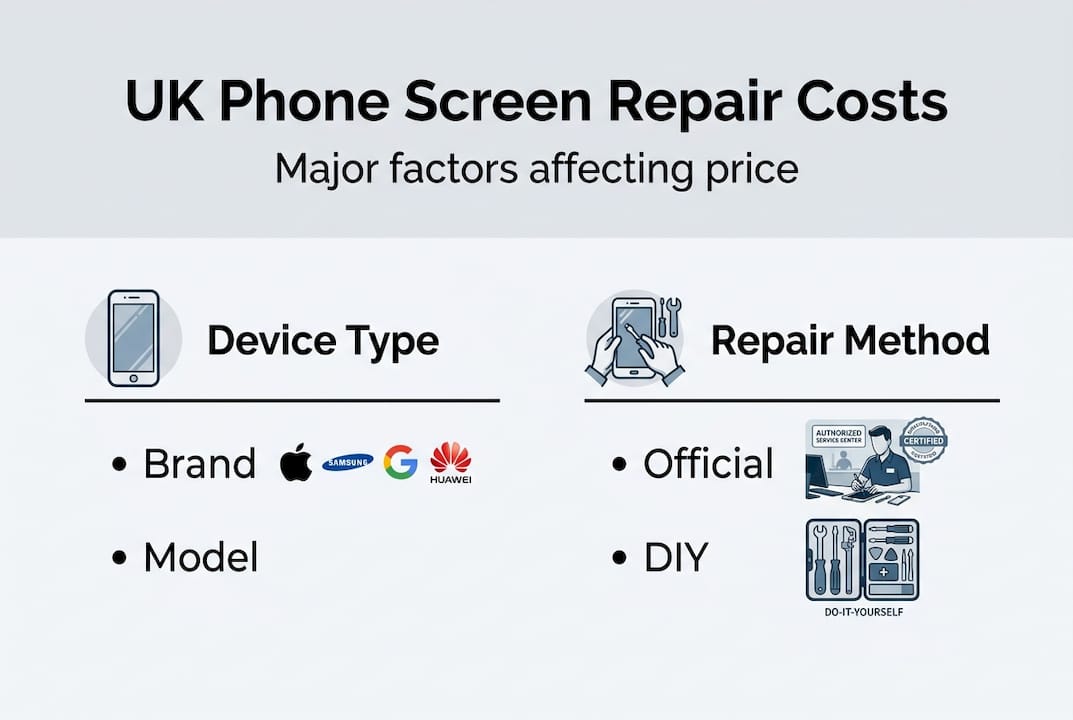
Part quality is where things get interesting. There are three tiers: genuine manufacturer parts (sourced directly from Apple or Samsung), OEM-equivalent parts (made to the same specification by third-party factories, often the same ones that supply the brands), and standard aftermarket parts (lower-cost alternatives with variable quality). Choosing the wrong tier affects screen brightness, colour accuracy, and how long the repair lasts.
Repair method is the third variable. Official centres charge a premium for labour and branded parts. Independent shops use OEM-equivalent or aftermarket parts with lower labour costs. DIY removes labour costs entirely but introduces personal risk.
| Device | Official centre | Local shop | DIY parts |
|---|---|---|---|
| Budget Android (e.g. Motorola G54) | £80–£110 | £40–£65 | £20–£35 |
| Mid-range Samsung (Galaxy A55) | £150–£200 | £75–£110 | £45–£70 |
| iPhone 14 | £269 | £120–£160 | £80–£130 |
| iPhone 15 Pro Max | £389 | £180–£240 | £130–£170 |
As you can see, repair costs from £40 to £389 reflect genuine differences in parts and service, not just brand prestige.
Additional charges to watch for include:
- Labour fees billed separately at some independent shops (typically £15–£40)
- Express or same-day service premiums (add £10–£30 at many local shops)
- Warranty inclusions (some shops bundle 3–6 months cover, others charge extra)
- Adhesive and small parts sometimes listed as separate line items
For a deeper breakdown, screen repair costs explained covers model-specific pricing in more detail.
Pro Tip: Always ask whether the quoted price uses OEM-equivalent or standard aftermarket parts. OEM-equivalent parts typically maintain original screen brightness and touch sensitivity, while cheaper alternatives can feel noticeably different within weeks.
Official repair centres vs local shops: How do costs and results compare?
After understanding key cost drivers, it’s vital to compare your main choices for getting a screen repaired. The difference isn’t just about price. It’s about what you actually get for your money.
Official centres (Apple Authorised Service Providers, Samsung Service Centres) guarantee genuine parts and preserve your manufacturer warranty. That sounds ideal, but you’re paying a significant premium, and turnaround times can stretch to several days if parts need ordering.
Reputable independent shops, meanwhile, have improved dramatically in recent years. Many now use OEM-equivalent parts that are visually and functionally indistinguishable from genuine components. Local shops offer 30–60% lower prices using high-quality parts, and many complete repairs within the hour.
“Which? advises checking that any third-party repair shop uses quality parts and offers a written warranty before you hand over your device.”
| Factor | Official centre | Local independent shop |
|---|---|---|
| Average cost (iPhone 14) | £269 | £120–£160 |
| Part quality | Genuine OEM | OEM-equivalent or aftermarket |
| Turnaround | 1–5 days | 30 min to same day |
| Warranty on repair | Manufacturer warranty intact | 3–12 months typically |
| Risk to data | Low | Low (reputable shops) |
| Voids existing warranty | No | Potentially yes |
Key considerations when choosing between them:
- Warranty status: If your phone is under manufacturer warranty, an official centre keeps it intact. Independent repair typically voids it.
- Part quality: For most models outside the latest flagship range, OEM-equivalent parts perform identically in daily use.
- Speed: Local shops almost always win on turnaround time.
- Data security: A reputable shop won’t need your passcode for a screen swap. If they ask for it, that’s a red flag.
You can save up to 60% on screens by choosing a trusted independent, and for a detailed look at iPhone screen fix costs specifically, it’s worth comparing quotes before committing.
Should you try a DIY phone screen repair?
Once you’ve weighed professional options, DIY repair can look appealing, if you fully understand the risks. The savings can be real, but so can the pitfalls.
DIY kits cost £20–£80, with genuine parts reaching up to £170 for premium models. Suppliers like iFixit and UK-based parts retailers provide model-specific kits with tools included. The question is whether the saving justifies the risk for your particular device.
When DIY makes sense:
- Your phone is older (2 years or more) and outside warranty
- The resale value is low enough that further damage wouldn’t be a major financial loss
- You have basic technical confidence and have watched model-specific repair guides
- The damage is surface-level cracking with no underlying display issues
- You’re repairing a budget Android with a straightforward screen assembly
When to avoid DIY:
- Your phone uses Face ID (iPhone X onwards): misaligned flex cables can permanently disable biometric features
- The device has IP67 or IP68 waterproofing: DIY breaks the seal, and re-sealing properly requires specialist equipment
- The phone is still under warranty: DIY voids it immediately
- The display has deep damage affecting the digitiser or backlight
- You’re working on a foldable device: these have extremely fragile internal components
A useful rule of thumb: if repair costs exceed 50% of the device’s resale value, replacement is often the smarter financial decision. For DIY repair and savings on specific models, checking part compatibility first saves a lot of frustration. More detailed DIY screen replacement advice can help you assess whether your model is a good candidate.
Pro Tip: Before ordering any DIY kit, search for your exact model number (not just the name) on iFixit’s repairability index. Phones rated 7 out of 10 or higher are genuinely manageable for a careful first-timer.
Deciding on the best value option for your screen repair
Having weighed all the options, here’s how you can quickly decide the repair path that fits your situation. The right choice depends on four things: your budget, the phone’s age, the severity of the damage, and how quickly you need it fixed.
Use this quick-reference checklist:
- Budget under £60: DIY kit for older Androids, or a local shop for budget models
- Budget £60–£150: Local independent shop for most mid-range phones; excellent value with warranty
- Budget £150+: Official centre if warranty matters; local shop if speed and cost are the priority
- Phone under 12 months old: Official centre to preserve warranty
- Phone 1–3 years old: Local independent shop offers the best balance
- Phone over 3 years old: DIY or budget local repair; weigh against replacement cost
- Minor surface crack, display working: DIY is viable if you’re confident
- Shattered screen with touch failure: Professional repair strongly recommended
- Need it fixed today: Local shop; most do same-day screen swaps
Local shops provide the best cost-quality balance and often same-day service with warranty, making them the right call for the majority of UK phone owners.
| Scenario | Best option | Estimated saving vs official |
|---|---|---|
| Flagship, in warranty | Official centre | N/A |
| Flagship, out of warranty | Local independent | 40–55% |
| Mid-range, any age | Local independent | 45–60% |
| Budget phone, confident user | DIY kit | Up to 73% |
| Budget phone, no confidence | Local independent | 40–50% |
For those comfortable with tools, DIY kits save 73% on certain models. If you’d rather let a professional handle it, a local screen repair guide can help you find and vet a reputable shop nearby.
A practical perspective: What most UK phone owners miss about screen repair value
With the core facts unpacked, here’s an honest take that rarely gets discussed on the high street. Most people overpay for screen repairs not because they’re uninformed, but because they default to the familiar. The official brand centre feels safe. The glossy shop front inspires confidence. But that peace of mind often costs £100 to £150 more than necessary.
The reality is that the parts market has matured significantly. OEM-equivalent screens from reputable suppliers now match genuine components in brightness, colour reproduction, and touch response for the vast majority of models. The gap between official and independent repair quality has narrowed to the point where, for phones outside their warranty period, there is genuinely little practical difference in outcome.
DIY is a legitimate option too, but only when the risks are genuinely understood rather than dismissed. The people who regret DIY repairs are almost always those who skipped the model-specific research. Those who take the time to check repairability scores and watch proper guides often come away with a working phone and real savings. Exploring affordable cracked screen solutions before committing to any route is always time well spent.
Save on quality UK phone repairs and DIY parts now
Now that you understand exactly what drives repair costs and which option suits your situation, the next step is finding quality parts or a trusted repair route without overpaying. Buy2Fix stocks an extensive range of OEM-equivalent and genuine replacement screens for iPhone, Samsung Galaxy, Huawei, Xiaomi, and many other brands, with free UK mainland shipping on every order. Whether you’re a confident DIY repairer looking for a reliable screen assembly or someone who wants to hand the job to a local technician with the right parts, Buy2Fix provides model-specific components backed by a one-year warranty and a 30-day returns policy. Browse the full catalogue to find the right screen for your device at a price that makes sense.
Frequently asked questions
How much does it cost to repair a phone screen in the UK?
Screen repair costs range from around £40 for budget models at local shops to over £350 for premium phones at official centres, with independent shops typically 30–60% cheaper than authorised service providers.
Is it cheaper to repair or replace a cracked phone screen?
Repairing is almost always cheaper unless the cost exceeds roughly half your phone’s current resale value, at which point replacement becomes wiser from a purely financial standpoint.
Can I fix my phone screen myself, and is it safe?
DIY repair is achievable with kits costing £20–£80, but risks further damage and voids your warranty, so it works best for older, low-value phones with surface-level cracks.
Do local UK shops offer warranties on repairs?
Yes, reputable independents typically offer warranties of 3 to 12 months on screen repairs; always ask for written confirmation of cover before leaving your device.
Recommended
Let customers speak for us
For Samsung Galaxy A26 SM-A266B Original Earpiece Speaker with Cable

Very good communication throught. Good product

Well made part very strong easy to fit great value for the money

Well packed, with fast shipping :)

Exactly what the doctor ordered…great color, comfort, and durability. Trust this watch band!

Brilliant strap, second purchase, bought bracelet before. Excellent value. Thank you

Great item for splitting your Audio signal

Outstanding product!
Next level customer service.

Very satisfied but the delivery needs to get more faster...

Good price,quick delivery

Best phone case ever! This is my second one as I broke my first. Would defo recommend

Great fitting Apple Watch bands

For Apple Watch Ultra 3 / 2 / 1 49mm RedPepper Armor Metal Case Integrated Silicone Watch Band(Steel Black White)

Good price and quick postage

