

iPhone camera lens repair costs and smarter savings
TL;DR:
- Repair costs vary greatly depending on iPhone model, parts needed, and repair provider.
- Using genuine parts and proper tools is crucial to avoid image quality issues and further damage.
- The cheapest repair may not be the best choice due to risks of misalignment, dust, or poor quality parts.
Many iPhone owners assume a cracked camera lens is a quick, cheap fix. Then the quote arrives. Whether you’re a DIY repairer sourcing your own parts or a repair technician pricing up a job for a customer, the real cost of fixing an iPhone camera lens depends on factors most guides gloss over entirely. Model generation, whether you’re replacing just the lens glass or the full camera module, and who carries out the work can push a repair from £15 to well over £250. This guide breaks down every variable so you know exactly what to expect before you spend a penny.
Table of Contents
- What influences the cost to fix an iPhone camera lens?
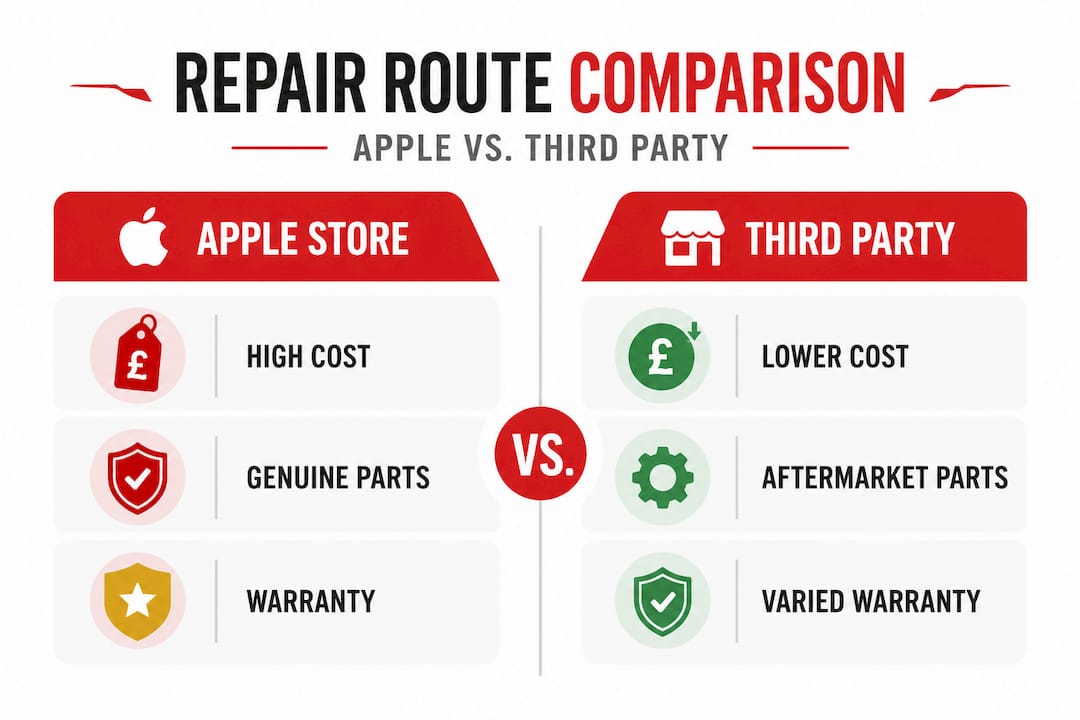
- Apple vs. third-party repair: Breaking down your choices
- Cost comparison by iPhone model and repair type
- Risks and tips: Genuine vs. non-genuine parts
- What most guides miss about iPhone camera lens repairs
- Find quality parts and reliable repair tools for your iPhone
- Frequently asked questions
Key Takeaways
| Point | Details |
|---|---|
| Model and provider matter | Repair costs depend on your iPhone model and whether you choose Apple or a third-party provider. |
| Genuine parts protect image quality | Using official Apple parts or reputable suppliers avoids camera faults and iOS warnings. |
| Third-party options offer savings | UK repair shops can cost less and include warranties, but confirm part authenticity. |
| DIY is risky but possible | With skill and the right tools, DIY repair is cheapest—especially for older models. |
| Repair complexity is increasing | Multi-lens and advanced iPhone designs mean newer models are harder and pricier to repair. |
What influences the cost to fix an iPhone camera lens?
The iPhone model sitting on your workbench is the single biggest cost driver. An older device like the iPhone 8 has a simpler, single-lens camera system with fewer components and wider parts availability, which keeps costs low. By contrast, the iPhone 15 Pro Max features a triple-lens periscope setup with sophisticated optical zoom hardware. More lenses mean more components, tighter manufacturing tolerances, and higher part costs across the board.
The second major variable is what you’re actually replacing. There’s a crucial difference between swapping out the camera lens glass (the thin protective cover sitting over the camera) and replacing the full camera module (the entire optical and sensor assembly). Lens glass breaks are far more common, and in many cases that small piece of curved glass is all that needs replacing. A full module failure is comparatively rare and considerably more expensive to fix.
- Lens glass only: Typically caused by drops or scratches; the sensor and optics underneath are usually unaffected
- Full camera module: Required when the sensor, autofocus motor, or internal optics are damaged; always costs significantly more
- iPhone model generation: Older models use simpler, more available parts; newer pro models are costlier and more complex
- Repair provider: Apple, independent shops, and DIY all carry very different price tags and service terms
Your choice of repair provider is the third lever. As noted in our iPhone camera glass cost guide, the gap between Apple’s official pricing and an independent workshop can be substantial. Apple’s out-of-warranty rear camera module replacement costs between £169 and £269 depending on model, which is significantly higher than what most lens-only glass repairs cost.
Remember: Before booking any repair, confirm whether the camera fault is a lens glass issue or a full module failure. Misdiagnosing this step is one of the most common reasons repair bills come as a shock.
Apple vs. third-party repair: Breaking down your choices
With the main cost drivers understood, the practical question becomes where to get the work done. Each route carries its own trade-offs, and the right one depends on your budget, risk tolerance, and what you need from the finished repair.
Apple authorised repair is the premium option. Whether you visit an Apple Store or an Apple Authorised Service Provider, you’ll receive genuine OEM parts and the repair will be logged against your device’s serial number. For iPhones running iOS 16 and above, this means the Parts and Service History in Settings will confirm the camera as “Genuine Apple.” The drawback is straightforward: cost. Apple’s labour and parts pricing sits at the high end of the market, and without AppleCare+, a camera module replacement can reach £269 on the latest Pro models.
Third-party independent repair shops occupy the middle ground. Most reputable UK shops offer lens glass repairs for a fraction of Apple’s module price, and many provide 6 to 12-month warranties on their work. The quality varies, but established shops staffed by experienced technicians often deliver results that are genuinely difficult to distinguish from factory repairs. The risk is centred on parts sourcing. As Apple’s own guidance confirms, non-genuine parts can introduce image quality problems, and in worst cases, safety hazards such as battery damage if surrounding components are disturbed during fitting.
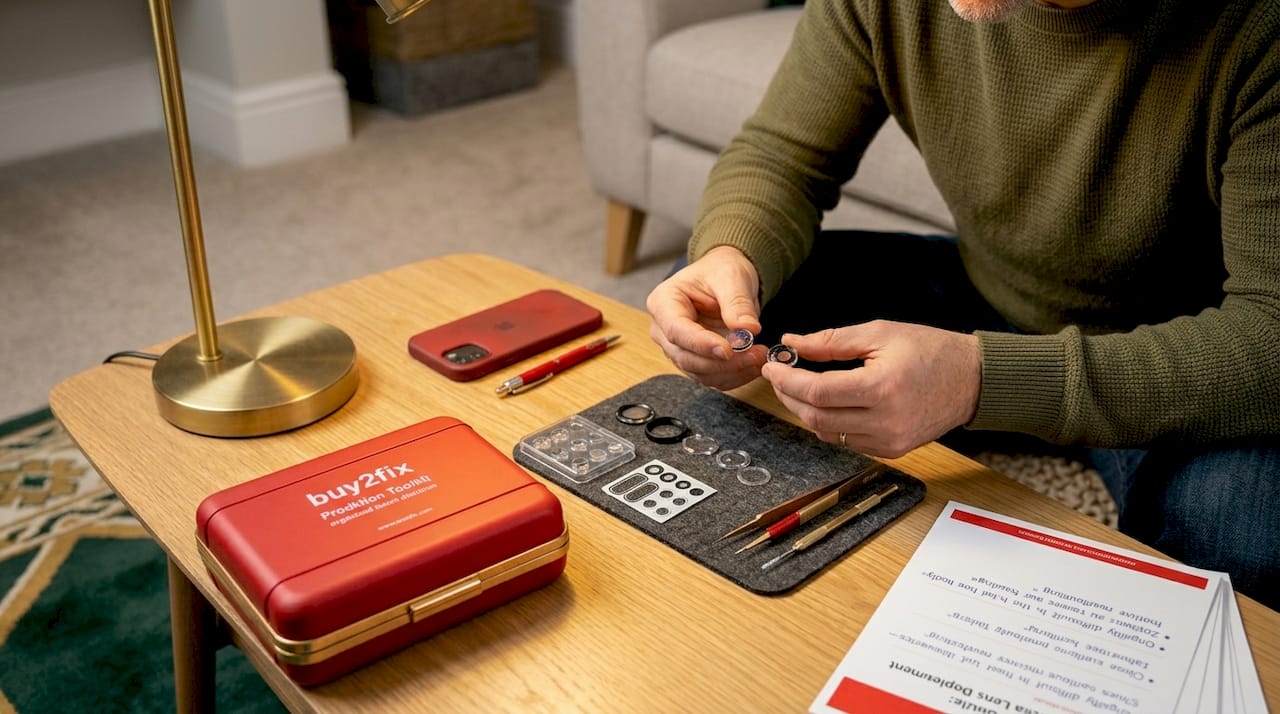
DIY repair is the most cost-effective path on paper, but it demands honesty about your skill level. Our camera lens repair guide covers the tools and techniques in detail, but even experienced repairers find that newer iPhone models require specialist equipment and a clean, dust-free environment. The lens glass sits very close to the camera sensor, and any contamination during the swap will show up as permanent smudges in photos.
| Repair route | Typical cost range | Parts quality | Warranty | iOS parts status |
|---|---|---|---|---|
| Apple Store / AASP | £169-£269 (module) | Genuine OEM | 90 days or AppleCare+ | Shows as “Genuine” |
| Reputable third-party shop | £20-£90 (glass only) | Varies | 6-12 months (shop dependent) | May show as non-genuine |
| DIY with quality parts | £8-£35 (parts cost) | Varies by supplier | None | Varies |
Pro Tip: Always ask an independent shop whether they use genuine Apple parts or quality aftermarket equivalents, and request confirmation in writing before work begins. A shop that won’t answer this question directly is a shop worth avoiding.
Cost comparison by iPhone model and repair type
Knowing your repair route, you’ll want concrete numbers. Prices shift regularly, but the figures below reflect typical UK market rates for 2026 across both lens glass and full module replacements.
| iPhone model | Lens glass (third-party) | Full module (third-party) | Full module (Apple out-of-warranty) |
|---|---|---|---|
| iPhone 11 | £15-£25 | £55-£80 | £169 |
| iPhone 12 / 12 Pro | £20-£35 | £65-£95 | £199 |
| iPhone 13 / 13 Pro | £25-£40 | £75-£110 | £219 |
| iPhone 14 / 14 Pro | £30-£50 | £90-£130 | £239 |
| iPhone 15 Pro / 15 Pro Max | £40-£65 | £110-£160 | £269 |
The iPhone 12 camera glass cost is a useful benchmark because it sits at a crossover point where the model is common enough to have strong parts availability, yet modern enough that repair complexity is meaningfully higher than older devices. This makes it a good reference for understanding how the cost curve works across the range.
A few important caveats on these figures. Insurance through your network provider or a standalone policy can cover camera repairs entirely, though excess fees often sit between £25 and £75, which can make insurance only marginally better than paying out of pocket for a lens glass fix on an older model. If you’re managing a fleet of devices for a small repair business, the cumulative cost of cracked iPhone screen repair costs alongside camera repairs on multiple devices makes parts sourcing directly a far more economical approach.
Newer iPhone Pro models also carry a hidden complexity cost. Third-party UK repairers confirm that multi-lens arrays and tighter component tolerances on the 14 Pro and 15 Pro series make the repair physically more demanding, which pushes labour charges up even when the parts themselves are affordable.
Risks and tips: Genuine vs. non-genuine parts
This is where many repair decisions go wrong. Choosing a cheaper part to save £20 can create problems that cost far more to put right, and in some cases introduce risks that money alone can’t fix.
The risks of non-genuine camera parts include:
- Degraded image quality: Aftermarket lens glass with slightly different optical coatings or curvature can cause softness, chromatic aberration, or flare that wasn’t present before the repair
- Autofocus problems: If the lens glass sits even a fraction of a millimetre out of position, the camera may hunt for focus or fail to lock entirely
- iOS warning messages: iPhones running iOS 15.2 and above actively detect non-genuine components; Apple’s parts pairing system will flag non-genuine cameras in the Parts and Service History
- Safety hazards: Poor quality parts or careless fitting can disturb nearby flex cables and battery connections, creating short circuit or battery swelling risks
- Dust ingress: Camera lens repairs performed outside a clean environment frequently result in dust particles trapped behind the glass, visible as spots in bright lighting conditions
The genuineness question isn’t purely about Apple’s branding. It’s about whether the part meets the optical and dimensional specifications the camera system was designed around.
Critical point: “Genuine” in Apple’s context specifically means parts sourced through Apple’s supply chain. High-quality aftermarket parts from reputable suppliers can still perform well, but they will be flagged as non-genuine by iOS, and their optical quality depends entirely on the supplier’s manufacturing standards.
Pro Tip: For lens glass replacement specifically, check that the replacement glass matches the original in curvature, thickness, and coating type. A flat piece of generic glass will not perform the same as optically curved OEM glass, even if it physically fits the frame.
Checking your repair outcome is straightforward on supported models. For iPhone 12 and newer running iOS 15.2 or later, navigate to Settings > General > About and scroll to “Parts and Service History.” Genuine Apple camera parts will display their status here. If the section shows unknown or non-genuine, your images and video may still be excellent depending on the parts used, but you have confirmation of what was fitted.
Our mobile camera expert tips go further on diagnosing post-repair camera faults and understanding which issues stem from part quality versus installation technique.
What most guides miss about iPhone camera lens repairs
Here’s the thing most repair cost guides won’t say plainly: the cheapest repair is frequently not the cheapest outcome.
We see this pattern repeat with frustrating regularity. A technician sources the lowest-cost lens glass available to keep their quote competitive, fits it without a proper heat mat to soften the adhesive fully, and the job looks fine on day one. Three weeks later, the customer returns because photos in bright light show a faint smudge, or because autofocus is intermittently sluggish. The repair now needs redoing, the customer’s trust is gone, and the technician has spent twice the time for zero additional revenue.
The hidden risk with modern multi-lens camera modules is alignment precision. Manufacturers like Apple use bonding adhesive and alignment fixtures during production that simply aren’t replicable in a workshop setting without the right equipment. Even a tiny rotation of the replacement lens glass during the bonding process can misalign the glass with the sensor below. You won’t see this in every lighting condition. You’ll see it in the shots that matter most, like low-light portraits or macro photography, which is exactly when your customer will notice.
Saving £30 to £50 on a part makes sense only if the part and the process are both sound. Trusted third-party repairers who invest in proper tools, clean environments, and quality parts absolutely can hit the value sweet spot between Apple’s premium pricing and a race-to-the-bottom parts gamble. The differentiator is almost never price alone. It’s process discipline and honest parts sourcing.
For DIY repairers, the honest advice is this: if you’re working on an iPhone 13 or newer, budget for proper tools, a clean workspace, and quality parts. Trying to save an extra £10 on parts while working on a kitchen table will likely cost you more in frustration than the saving is worth. If you’re unsure whether a cracked back glass is masking further camera damage, our article on iPhone back repair risks explains what to check before starting any camera-adjacent repair.
Find quality parts and reliable repair tools for your iPhone
At Buy2fix, we stock a broad range of iPhone camera lens replacement parts and repair accessories for both DIY enthusiasts and professional technicians across the UK. After seeing how dramatically part quality and sourcing can affect the final result, we make sure everything we dispatch has passed quality checks before it leaves our warehouse. Whether you’re fixing a single iPhone 12 lens glass or stocking up on repair parts for a busy workshop, you’ll find clear product information, fair pricing, and free shipping across mainland UK. Browse our iPhone repair parts catalogue and see why thousands of UK repairers trust Buy2fix for dependable stock, a 30-day return policy, and warranty support on eligible items.
Frequently asked questions
Is it cheaper to fix iPhone camera lens or full module?
Replacing just the camera lens glass is usually much cheaper than a full camera module replacement, with Apple charging £169-£269 for out-of-warranty module swaps compared to as little as £15 to £65 for lens glass repairs at third-party shops.
Are third-party iPhone camera lens repairs safe?
Quality can vary considerably; using genuine or high-quality parts is safest, and reputable UK third-party shops often offer valid warranties, but Apple may flag non-genuine parts in the Parts and Service History on iOS 15.2 and above.
How can I tell if my iPhone camera part is genuine?
For iPhone 12 and newer running iOS 15.2 or later, navigate to Settings, then General, then About, and check “Parts and Service History.” Genuine Apple parts will display their verified status there.
Do Apple camera lens repairs include warranty?
Apple repairs generally include a 90-day warranty or are covered by AppleCare+, while many third-party UK shops offer 6 to 12-month guarantees on their camera repair work.
Is DIY camera lens repair difficult for the latest iPhones?
It’s considerably more challenging on newer models due to complex multi-lens layouts and tight tolerances, as Apple and third-party repairers confirm; specialist tools, quality parts, and a clean environment are all essential for a reliable result.
Recommended
- iPhone camera lens replacement: Save money with smart choices – Buy2fix
- iPhone camera glass replacement cost guide 2026 – buy2fix
- iPhone 12 Camera Glass Cost: Repair and Quality Impact – buy2fix
- Phone Camera Lens Repair Guide for DIY and Professionals – buy2fix
- Refurbished Electronics Explained: Save Money and Go Green – Sim Lim Square Insider
Let customers speak for us
For Samsung Galaxy A26 SM-A266B Original Earpiece Speaker with Cable

Very good communication throught. Good product

Well made part very strong easy to fit great value for the money

Well packed, with fast shipping :)

Exactly what the doctor ordered…great color, comfort, and durability. Trust this watch band!

Brilliant strap, second purchase, bought bracelet before. Excellent value. Thank you

Great item for splitting your Audio signal

Outstanding product!
Next level customer service.

Very satisfied but the delivery needs to get more faster...

Good price,quick delivery

Best phone case ever! This is my second one as I broke my first. Would defo recommend

Great fitting Apple Watch bands

For Apple Watch Ultra 3 / 2 / 1 49mm RedPepper Armor Metal Case Integrated Silicone Watch Band(Steel Black White)

Good price and quick postage

