

Fix a cracked iPhone back for less: UK repair options
TL;DR:
- Affordable UK repair options offer high-quality back glass replacement outside Apple’s costly services.
- Cracked iPhone back glass risks device damage, safety hazards, and reduced water resistance.
- Choosing reputable third-party shops or DIY with quality parts ensures better value and faster fixes.
Most iPhone owners assume that only Apple can fix a broken back glass. That assumption is costly. Apple’s out-of-warranty repair can run from £259 to £599 or more, and in many cases Apple replaces the entire device rather than just the glass panel. For UK users juggling everyday budgets, that price tag is simply unrealistic. The good news is that affordable, high-quality alternatives exist right here in the UK, whether you prefer a trusted local repair shop, a mail-in service, or a confident DIY approach. This guide walks you through every option so you can make a smart, informed decision.
Table of Contents
- Why does the back of iPhones crack and what are the risks?
- Official Apple repair: process and costs explained
- Third-party and DIY iPhone back repair: affordable alternatives
- How to choose the right repair: price, quality, and convenience
- A fresh perspective: what most guides get wrong about iPhone back repairs
- Fix your cracked iPhone back with confidence
- Frequently asked questions
Key Takeaways
| Point | Details |
|---|---|
| Apple repair costs are high | Official repairs often cost £259 or more, with no back glass-only pricing listed. |
| DIY and third-party save money | Trusted UK repair shops and self-repair kits offer significant savings for most iPhones. |
| Consider quality and warranty | Weigh savings against risks to warranty and ensure proper parts and installation methods. |
| Quick repair prevents further damage | Addressing a cracked back early avoids injury and deeper phone damage. |
Why does the back of iPhones crack and what are the risks?
Apple switched to glass backs starting with the iPhone 8, primarily to enable wireless charging. Glass looks premium and feels great in the hand, but it comes with a significant trade-off: it shatters. Both the front and back panels are made from toughened glass, yet neither is immune to the physics of a concrete floor.
The most common causes of back glass cracking include:
- Drops onto hard surfaces such as pavements, tiles, or wooden floors
- Pressure in tight pockets or bags, especially when sitting down
- Rapid temperature changes, for instance moving from a cold outdoor environment into a warm building
- Manufacturing stress, which can cause micro-fractures to worsen over time
A hairline crack might seem harmless at first, but the risks of leaving it unaddressed are real. The back glass contributes to the structural integrity of the device. Once it is compromised, internal components become more vulnerable to dust, moisture, and impact. On models rated for water resistance such as the iPhone 12 onwards, a cracked back destroys the IP rating entirely, leaving your phone exposed to damage from rain or spills.
A cracked back panel also interferes with wireless charging efficiency. The Qi charging coil sits just beneath the glass, and a shattered panel can disrupt the signal, leading to slower or failed charging sessions.
There is also a safety concern. Broken glass edges can cut fingers, particularly if the crack spreads across a large area. For small repair businesses, handing a client back a device with a cracked shell is simply not acceptable.
Resale value takes a hit too. A visibly damaged iPhone can lose a significant portion of its second-hand market value, which matters if you plan to upgrade. Apple charges high fees for back glass repairs and does not publicly list back glass-only prices, which makes budgeting difficult. Understanding the iPhone back repair risks in full helps you prioritise action rather than delay.
Official Apple repair: process and costs explained
Understanding the risk underscores why choosing the right repair route matters. Next, let’s look at what going through Apple actually involves.
When you book an Apple repair for a cracked back, the process is not as straightforward as dropping off your phone and collecting it an hour later. Apple’s technicians first carry out a full device inspection. If they find any other issues, including liquid damage or unrelated component faults, they may refuse the repair or quote for additional work.
For many iPhone models, Apple does not offer a standalone back glass replacement. Instead, they replace the entire rear housing assembly or, in some cases, the whole device. This is partly because modern iPhones are assembled in ways that make isolating the back glass extremely labour-intensive.
Here is a rough breakdown of how Apple’s repair pricing compares across scenarios:
| Repair scenario | Approximate cost (UK) |
|---|---|
| AppleCare+ accidental damage (per incident) | £29 to £99 |
| Out-of-warranty back damage (older models) | £259 to £349 |
| Out-of-warranty back damage (Pro/Pro Max) | £449 to £599+ |
| Full device replacement (out of warranty) | £399 to £799+ |
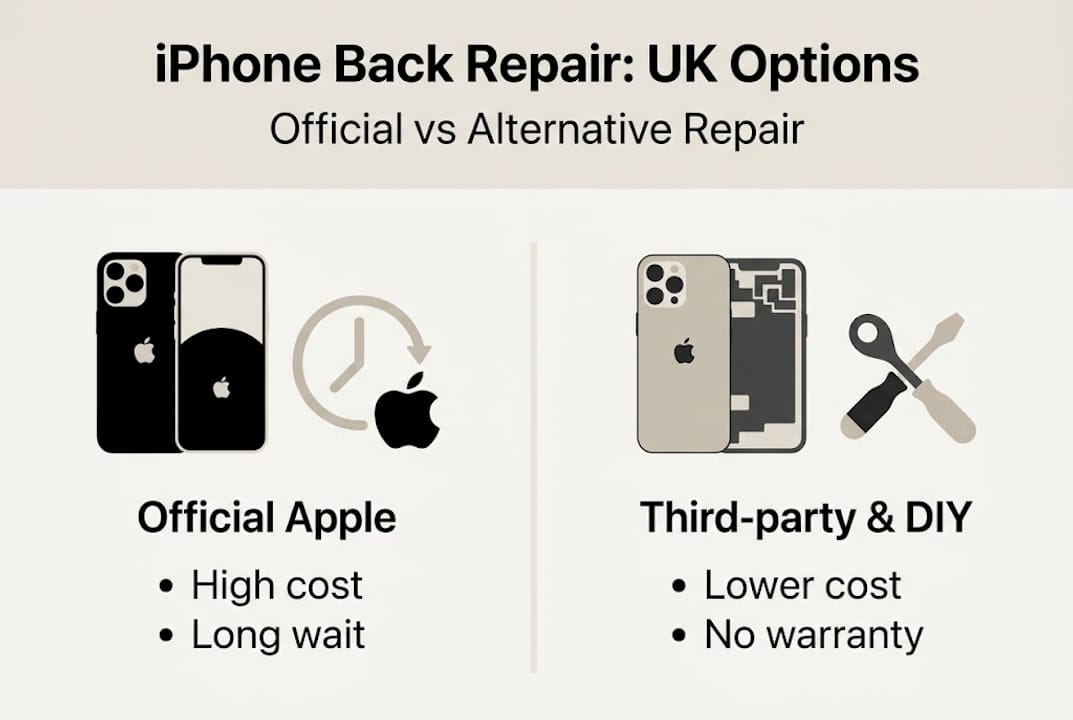
Apple official repair costs can reach £599 or beyond in the UK, often involving a full replacement unit rather than a targeted fix. VAT is included in these figures, but postal fees or in-store appointment delays add to the overall inconvenience.
AppleCare+ does reduce the per-incident cost, but it must be purchased within 60 days of buying the device. Many users simply do not have it. Without AppleCare+, you are paying full price with no negotiation. You can find a detailed Apple repair cost guide that breaks down current 2026 pricing across models if you want to compare before committing.
Turnaround time is another factor. Apple Store appointments can be scarce in busy periods, and mail-in repairs typically take five to seven working days. For anyone who relies on their iPhone for work, that is a long time without a device.
Third-party and DIY iPhone back repair: affordable alternatives
Given the steep costs of official Apple repair, many look to alternatives. Here is how third-party and DIY options line up.
Reputable UK repair shops have expanded rapidly over the past few years. Many now use OEM-grade parts and employ trained technicians who work on iPhones daily. Pricing for a back glass replacement at a quality independent shop typically ranges from £50 to £120 depending on the model, a fraction of what Apple charges.
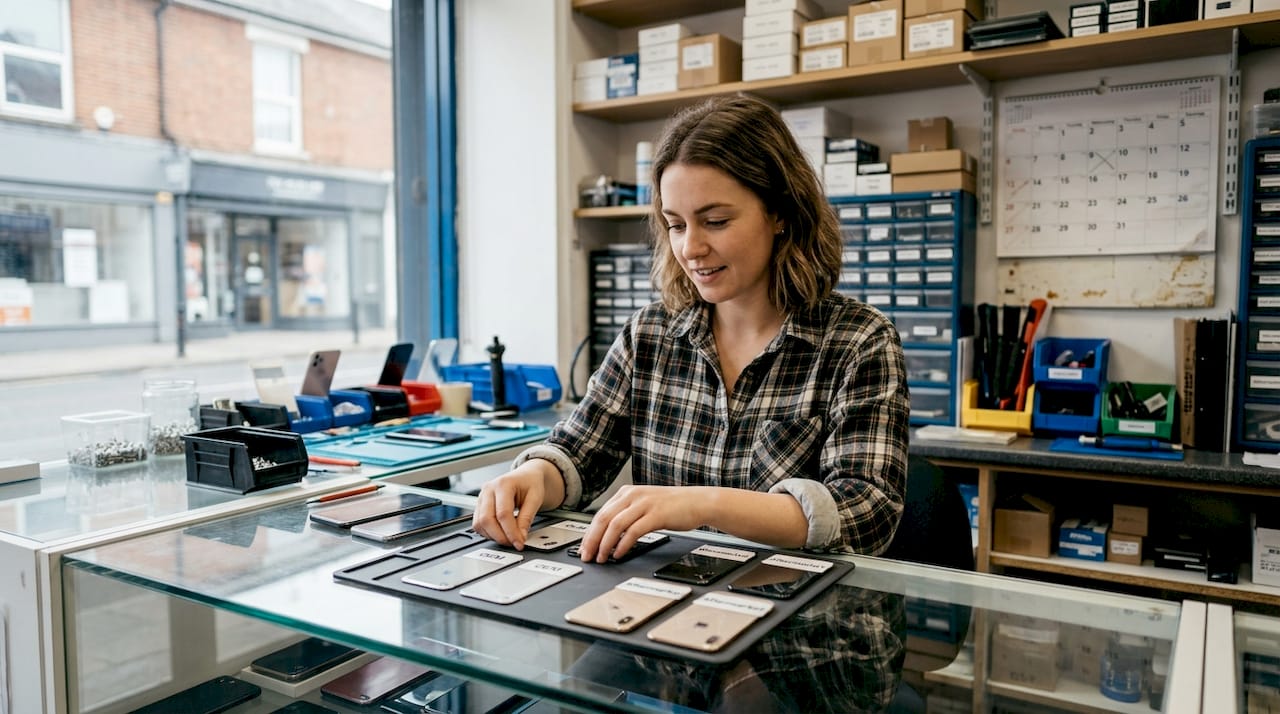
Independent repairs are far less expensive and more flexible than Apple, offering both walk-in and mail-in services. Walk-in repairs for common models can be completed within one to two hours. Mail-in services are ideal for those outside major cities. You can explore local back glass repair pricing to get a realistic idea of what shops near you are charging.
For confident DIY enthusiasts, replacing the back glass yourself is entirely achievable with the right kit. Here is a step-by-step approach:
- Power off the device completely before starting any repair work
- Gather your tools: a heat gun or hair dryer, suction cup, spudger, and precision screwdrivers
- Apply gentle heat to the back panel edges to soften the adhesive, working in short bursts
- Use the suction cup to lift the glass carefully from one corner, avoiding the camera area
- Remove the old glass and clean the adhesive residue thoroughly before fitting the new panel
- Apply the replacement glass using the pre-cut adhesive strips included in quality kits
- Press firmly and allow the adhesive to cure for at least one hour before use
Pro Tip: Always use a quality replacement kit from a reputable supplier. Cheap panels can interfere with wireless charging and may not align correctly with the camera cutout. A detailed DIY iPhone back glass repair guide is worth reading before you start.
One important note: third-party and DIY repairs will void any remaining Apple warranty. If your device is still under warranty or covered by AppleCare+, weigh that carefully before proceeding.
How to choose the right repair: price, quality, and convenience
Now you know the main repair options, it is time to make the best choice for your needs.
Independent repair costs are far lower than Apple’s, but part quality and aftercare can vary significantly between providers. Choosing poorly can mean a second repair job within months.
Here is a practical checklist to guide your decision:
- Compare total costs: include parts, labour, and any hidden fees such as postage or diagnostic charges
- Ask about part quality: OEM (original equipment manufacturer) parts perform closest to factory specification; quality aftermarket parts are a solid second choice
- Check turnaround time: a same-day repair matters if you use your phone for business
- Verify aftercare terms: does the shop offer a warranty on the repair? Thirty days minimum is reasonable; ninety days or more is a good sign
- Read reviews: Google and Trustpilot reviews from recent customers reveal a lot about reliability and communication
- Confirm data safety: a reputable shop will not need your passcode to replace the back glass
Pro Tip: If you are running a small repair business and sourcing parts in bulk, prioritise suppliers who offer consistent quality control and clear return policies. One faulty batch of back panels can damage your reputation quickly.
For DIY repairs, the quality of the replacement part is the single biggest variable. A well-sourced panel from a specialist supplier will behave like the original. A cheap import may not. The complete repair guide for the iPhone 8 is a useful reference for understanding the level of detail involved across different models.
OEM versus aftermarket is not always a clear-cut choice. For older models out of warranty, a high-quality aftermarket part is often indistinguishable in performance and appearance. For newer models, OEM-grade parts are worth the small premium.
A fresh perspective: what most guides get wrong about iPhone back repairs
Most repair guides steer readers straight towards Apple as the default safe option. That framing is outdated. The assumption that official equals better quality simply does not hold up in 2026.
Many UK repair shops now source parts that meet or exceed OEM specifications. The technicians working in these shops often have years of hands-on experience with iPhones specifically. Apple’s own authorised service providers use some of the same supply chains.
The real risk is not choosing a third-party repair. The real risk is choosing a poor quality third-party repair. That distinction matters. A well-reviewed independent shop with clear warranty terms and transparent pricing is not a compromise. It is often a genuinely better experience than waiting a week for an Apple mail-in service.
DIY is similar. Done carefully with quality parts, it is a legitimate solution. The risks of official repair are rarely discussed, but they exist: full device replacements mean losing your original hardware, and Apple’s inspection process can flag issues you were unaware of, leading to unexpected costs. Question the default. Make the choice that fits your budget, timeline, and confidence level.
Fix your cracked iPhone back with confidence
Ready to get your iPhone looking and functioning perfectly again? Whether you are a DIY enthusiast sourcing your own parts or a small repair business looking for reliable stock, Buy2fix has you covered. We stock a wide range of iPhone back covers and housing parts, from the iPhone 8 through to the latest models, all with free UK mainland shipping and a one-year warranty. Our parts are quality-tested before dispatch, so you can repair with confidence. Repair your iPhone back cover by browsing our full range today. No hidden fees, no fuss, just quality parts delivered fast to your door.
Frequently asked questions
Can you fix the back of an iPhone in the UK without Apple?
Yes, many reputable third-party repair shops and DIY kits in the UK offer cost-effective back glass replacement. Independent repairs are widely available as both walk-in and mail-in services.
How much does it cost to replace iPhone back glass in the UK?
Apple may charge £259 to £599 or more for out-of-warranty repairs; third-party shops typically charge £50 to £120 depending on the model and location.
Does DIY iPhone back repair void warranty?
DIY or third-party repairs can void the remaining Apple warranty, so check your current coverage before starting. AppleCare+ accidental damage cover is also limited to authorised repairs.
Is it safe to use a cracked iPhone back?
Using an iPhone with a cracked back glass risks cuts from sharp edges, reduced water resistance, and further internal damage over time. Risks include injury and a significant drop in resale value if left unaddressed.
Recommended
Let customers speak for us
For Samsung Galaxy A26 SM-A266B Original Earpiece Speaker with Cable

Very good communication throught. Good product

Well made part very strong easy to fit great value for the money

Well packed, with fast shipping :)

Exactly what the doctor ordered…great color, comfort, and durability. Trust this watch band!

Brilliant strap, second purchase, bought bracelet before. Excellent value. Thank you

Great item for splitting your Audio signal

Outstanding product!
Next level customer service.

Very satisfied but the delivery needs to get more faster...

Good price,quick delivery

Best phone case ever! This is my second one as I broke my first. Would defo recommend

Great fitting Apple Watch bands

For Apple Watch Ultra 3 / 2 / 1 49mm RedPepper Armor Metal Case Integrated Silicone Watch Band(Steel Black White)

Good price and quick postage

