

Cost of Phone Repairs UK 2025: How Prices Compare
Phone repairs in the UK often leave both DIY enthusiasts and small business owners weighing up more than just the price of a replacement part. The real cost goes beyond a cracked screen because variables like device model, part quality, and the choice between genuine or aftermarket components shape your total bill. Knowing what really drives these expenses means you can make smarter choices and find the right balance between affordability, performance, and trusted supplier relationships.
Table of Contents
- What Determines Phone Repair Costs UK 2025
- Common Types of Phone Repairs and Price Ranges
- OEM, Aftermarket and Third-Party Parts Explained
- Repair Options: Manufacturer, Independent Shops, DIY
- Warranty, Insurance and Consumer Rights Impact on Costs
Key Takeaways
| Point | Details |
|---|---|
| Repair costs vary | Costs fluctuate based on device model, age, and type of damage, affecting repair price significantly. |
| Parts sourcing influences price | Availability of parts determines repair costs; OEM parts are more expensive than aftermarket alternatives. |
| Repair location matters | Authorised service centres charge significantly more than independent shops, impacting your total repair bill. |
| Consider warranties and consumer rights | Understanding warranty implications and consumer rights can help you avoid unexpected costs in repairs. |
What Determines Phone Repair Costs UK 2025
Phone repair costs in the UK fluctuate based on several interconnected factors that go beyond simply replacing a broken component. Understanding what drives these prices helps you make smarter decisions, whether you’re running a repair business or fixing your own device.
Device model and age matter significantly. Repairing a flagship iPhone 17 costs more than fixing an iPhone 12, partly because newer components command higher prices and repair procedures differ. Older devices sometimes cost less to repair, but sourcing parts becomes harder and more expensive.
The type of damage directly impacts your bill. A cracked screen repair differs vastly from a damaged motherboard or a faulty charging port. Screen replacement costs vary considerably depending on whether you need an original display or an aftermarket alternative.
Parts availability and sourcing determine labour time and component pricing. Commonly damaged parts like screens and batteries stock easily, keeping costs competitive. Rare components for discontinued models require specialist sourcing, driving prices up significantly.
The repair location plays a crucial role. Authorised service centres typically charge more than independent shops, sometimes 40-60% higher for identical work. DIY enthusiasts buying parts separately pay the least when they handle installation themselves.
Here’s what typically influences your final invoice:
- Display type: Original OEM screens cost 2-3 times more than quality aftermarket alternatives
- Labour rates: Authorised shops charge £50-120 per hour; independent technicians often cost £25-60
- Parts warranty: Extended warranties and guarantees increase the upfront cost
- Repair complexity: Simple battery swaps take 20 minutes; motherboard repairs require hours of work
- Regional pricing: London and major cities charge more than smaller towns
Battery replacements typically cost £30-80 depending on your phone model, whilst charging port repairs range from £40-150. Water damage repairs become expensive quickly, sometimes exceeding £150-300 because technicians must clean internal components thoroughly.
Component quality directly affects both price and longevity. Investing slightly more in quality parts now saves money on repeat repairs later.
The genuine versus aftermarket decision shapes your budget dramatically. Genuine components cost more but carry manufacturer backing. Aftermarket parts cost 30-50% less and perform reliably when sourced from reputable suppliers, making them popular with budget-conscious DIY repairers.
Repair shops factor in overhead costs, including rent, tools, insurance, and skilled staff time. These business expenses push professional repair prices higher than component costs alone.
Here is a summary table showing the impact of key factors on total phone repair costs:
| Factor | Influence on Cost | Typical Effect |
|---|---|---|
| Device Model & Age | New models cost more | Higher parts price, complex repair |
| Type of Damage | Varies by component | Screen cheapest, motherboard most expensive |
| Parts Sourcing | Availability impacts price | Rare parts increase overall cost |
| Repair Location | Labour rates differ | Authorised centres more expensive |
| Warranty Coverage | Extends support, adds up-front cost | Peace of mind, extra expense |
| Regional Pricing | London higher than rural | Urban shops charge premium |
| Repair Complexity | Time and skill needed | Simple swaps fast, advanced repairs slow |
Pro tip: Compare quotes from three different sources before committing—independent technicians, authorised centres, and DIY part costs. You’ll often find independent shops offer the best value for straightforward repairs like screens and batteries.
Common Types of Phone Repairs and Price Ranges
Most phone repairs fall into predictable categories, each with its own cost bracket. Knowing what you’re facing helps you budget accurately and decide whether to DIY or seek professional help.
Display repairs remain the most common request. Cracked screens dominate repair shop queues, and prices reflect the display type you choose. Phone screen replacement costs typically range from £80-250 for modern smartphones, depending on whether you select an original equipment manufacturer (OEM) display or a quality aftermarket alternative.

Battery replacements rank second in frequency. Your battery gradually loses capacity over time, and most phones need replacement after 3-5 years. Expect to pay £30-80 for a battery swap, making this one of the most affordable repairs you’ll encounter.
Charging port repairs come in third. Damaged ports prevent proper charging or data transfer. These repairs cost £40-150 because technicians must desolder components on the motherboard, requiring specialist equipment and skill.
Here’s a breakdown of common repairs and typical costs:
- Screen replacement: £80-250 (OEM); £40-120 (aftermarket)
- Battery replacement: £30-80
- Charging port repair: £40-150
- Camera module replacement: £60-180
- Water damage restoration: £150-400+
- Motherboard repairs: £100-300+
- Speaker replacement: £40-100
- Back panel replacement: £30-120
Camera damage happens frequently, especially with dropped phones. Replacing camera modules costs £60-180 depending on which lens failed and your device model. Water damage becomes expensive because technicians must disassemble the entire phone, clean every component, and test for corrosion. Budget £150-400 or more.
Speaker and microphone repairs typically cost £40-100 and require disassembly but no soldering. Back panel replacement ranges from £30-120 depending on whether your phone has a glass or plastic rear.
Screen and battery repairs account for roughly 70% of all repair shop work. These high-volume repairs keep prices competitive.
Motherboard repairs represent the most expensive category. Logic board damage from water, impact, or manufacturing defects requires specialist diagnostics and micro-soldering skills. These repairs easily exceed £100-300+ and sometimes aren’t worth pursuing on older devices.
Prices vary based on your phone model. Samsung Galaxy devices typically cost less to repair than equivalent iPhones. Flagship models cost more than mid-range devices simply because components cost more to manufacture.
Pro tip: For screen repairs specifically, compare OEM and aftermarket options—aftermarket screens from trusted suppliers perform just as well at half the price, making them ideal for budget-conscious DIY repairers or business owners seeking better margins.
OEM, Aftermarket and Third-Party Parts Explained
Three main categories of phone repair parts exist, each with distinct advantages, costs, and implications for your repair business or DIY projects. Understanding these differences helps you make informed purchasing decisions.
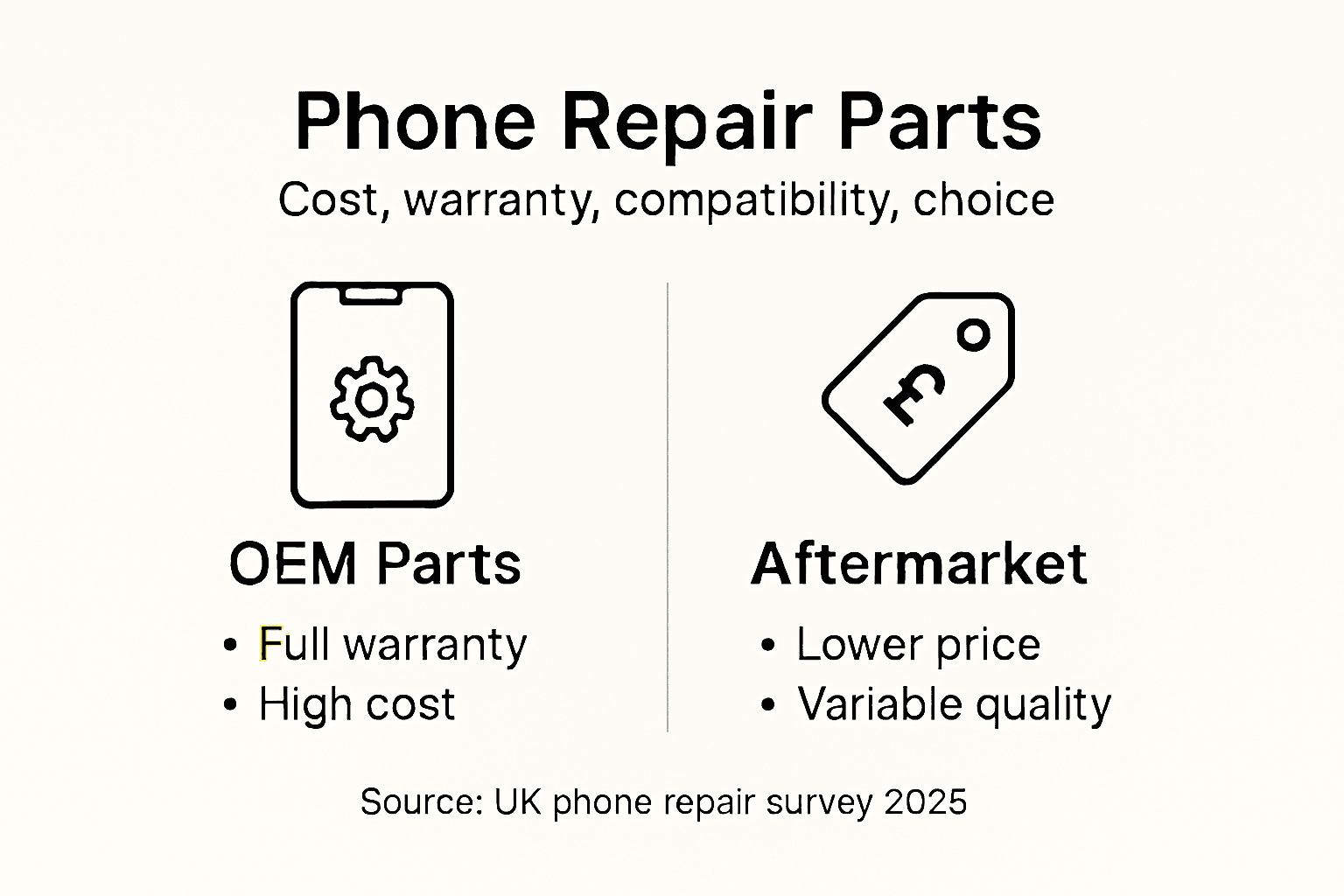
OEM parts are manufactured by the original phone maker. These components carry the manufacturer’s quality stamp and integrate seamlessly with your device. OEM parts cost significantly more—often 50-100% higher than alternatives—but arrive with manufacturer warranties and guaranteed compatibility.
Aftermarket parts come from independent manufacturers who produce compatible replacements without being the original manufacturer. Quality varies considerably across suppliers, but reputable aftermarket components perform reliably at a fraction of OEM costs. You’ll save 30-50% compared to genuine parts whilst maintaining solid performance.
Third-party parts represent the budget option. These generic components sometimes lack rigorous quality control and may not fit perfectly or last as long. However, many DIY repairers choose third-party parts for older devices where cost matters more than longevity.
Key differences between these categories:
- OEM parts: Full compatibility, manufacturer warranty, highest cost, guaranteed quality
- Aftermarket parts: Good compatibility, variable warranty, mid-range cost, quality depends on supplier
- Third-party parts: Basic compatibility, limited warranty, lowest cost, quality inconsistent
Warranty and support differs dramatically. OEM components typically include a 12-month manufacturer warranty. Quality aftermarket suppliers offer 6-12 month coverage. Third-party parts rarely include meaningful warranties, leaving you responsible for failures.
Compatibility concerns matter more than many repairers realise. OEM screens fit perfectly and calibrate automatically with your phone’s hardware. Aftermarket displays from trusted suppliers work nearly as well. Third-party screens sometimes trigger software warnings or fail to support advanced features like True Tone or pressure sensitivity.
Managing third-party supplier relationships requires clear contracts to maintain operational resilience and ensure consistent service quality. Professional repair businesses must vet suppliers carefully to avoid disruption and customer dissatisfaction.
Cost comparison reveals why many businesses mix strategies. For high-volume repairs on budget-conscious customers, aftermarket parts offer excellent value. For premium devices or customers demanding original components, OEM parts justify the investment.
Quality aftermarket parts from established suppliers perform virtually identically to OEM components whilst costing significantly less, making them ideal for cost-conscious DIY repairers.
Your sourcing choice affects profit margins directly. A repair shop buying OEM screens at £80 and charging customers £150 nets £70 profit. The same job with aftermarket screens costing £35 nets £115 profit at the same customer price, or £85 at a lower £120 customer rate that remains competitive.
Reputation matters when selecting suppliers. Established aftermarket manufacturers have invested in quality assurance and testing. Unknown third-party suppliers may cut corners on component testing, leading to premature failures and customer complaints.
Pro tip: Build relationships with one or two reliable aftermarket suppliers rather than jumping between dozens. Consistent sourcing ensures predictable quality, faster shipping, and better pricing through volume discounts.
Repair Options: Manufacturer, Independent Shops, DIY
You have three main pathways when your phone needs repair, each with different costs, timeframes, and outcomes. Choosing correctly depends on your budget, device value, and technical confidence.
Manufacturer repairs offer guaranteed quality and warranty protection. Apple, Samsung, and other brands run official repair centres that use genuine components and follow strict protocols. Expect to pay premium prices—often 40-60% higher than independent alternatives—but you receive full warranty coverage and peace of mind.
Manufacturer repairs take longer because they typically involve shipping your device to a service centre or waiting for appointments at busy retail locations. Turnaround times range from 5-14 days depending on damage severity and current demand.
Independent repair shops dominate the UK market. These businesses offer competitive pricing, faster turnaround, and personalised service. Quality varies significantly, so verify shops carefully to avoid unauthorised firms that lack consumer protections.
Reputable independent shops cost 30-50% less than manufacturers whilst maintaining high standards. Many specialise in specific brands or repair types, building expertise that rivals official centres. Most complete repairs within 24-48 hours.
DIY repairs give you maximum control and lowest costs. Buying parts directly and installing them yourself eliminates labour charges entirely. However, common mistakes in phone repairs can cause permanent damage worth far more than the repair cost.
Here’s how these options compare:
- Manufacturer: Highest cost, genuine parts, full warranty, slow turnaround
- Independent shop: Mid-range cost, variable quality, faster service, limited warranty
- DIY approach: Lowest cost, requires skill, risk of damage, no warranty
Warranty implications matter significantly. Manufacturer repairs come with 12-month coverage on replaced components. Independent shops typically offer 3-6 month warranties. DIY repairs carry zero warranty—you assume all risk.
Cost differences become dramatic on expensive devices. Repairing an iPhone 16 screen through Apple costs £200-250. Independent shops charge £100-150. DIY costs £40-60 for parts alone. On a £1,200 device, that £150 difference justifies using professionals.
Older devices flip this equation. Repairing a 5-year-old phone through a manufacturer costs nearly as much as a new budget device. Independent shops make sense. DIY becomes attractive when the repair represents 20-30% of current device value.
Community repair networks across the UK offer growing alternatives, combining affordability with expert guidance for those learning DIY techniques.
Turnaround time affects your decision too. Manufacturers take 1-2 weeks. Independent shops return devices within days. DIY takes hours but demands uninterrupted focus.
For quick reference, here is a comparison of repair approaches and their typical outcomes:
| Approach | Cost Range | Turnaround Time | Warranty Coverage |
|---|---|---|---|
| Manufacturer Centre | Highest (£200+) | 5-14 days | 12 months (full) |
| Independent Shop | Moderate (£80-150) | 24-48 hours | 3-6 months (limited) |
| DIY Repair | Lowest (£40-60) | Few hours | None (at own risk) |
Risk tolerance matters most. Confident repairers who’ve watched tutorials and possess steady hands succeed with DIY. Nervous individuals should use professionals. One wrong movement damages a £500 display.
Pro tip: For your first DIY repair, choose simple jobs like battery or back panel replacement. These teach you the process with minimal risk, building skills for tackling harder repairs like screens or charging ports later.
Warranty, Insurance and Consumer Rights Impact on Costs
Warranty coverage, insurance policies, and consumer protections fundamentally reshape what you actually pay for phone repairs. Understanding these layers helps you avoid unexpected bills and claim entitlements you may not know you have.
Manufacturer warranty covers defects for 12 months. This covers manufacturing faults, not accidental damage. If your screen fails due to a manufacturing defect within warranty, Apple or Samsung repairs it free. Accidental drops don’t qualify, which is why many people buy additional insurance.
Extended warranties shift repair costs dramatically. These optional policies cost £50-150 upfront but cover accidental damage for 2-3 years. A single screen repair claim eliminates the warranty cost immediately, making extended coverage worthwhile if you’re accident-prone.
Insurance plays a substantial role in repair budgeting. Mobile phone insurance typically costs £5-15 monthly and covers theft, loss, and damage. However, excess fees range from £25-150 per claim, and insurers sometimes deny claims for “wear and tear” or specific damage types.
Consumer rights under the Consumer Rights Act 2015 protect you against unfair repair costs and faulty work. Understanding insurance coverage options helps you make informed decisions about protection strategies.
Key protections working in your favour:
- Statutory guarantee: 6-year coverage for faulty repairs (5 years in Scotland)
- Unfair contract terms: Repair shops can’t charge excessive costs for obvious faults
- Refund rights: If repairs fail within 30 days, you can request a refund
- Documentation: Shops must provide written repair estimates and warranty information
Repair shop warranties offer 3-6 month coverage. This covers workmanship faults, not new damage. If a shop replaces your screen and it fails within 30 days from a defect in their work, they must repair or replace it free.
Warranty periods matter significantly. A £120 screen repair with a 6-month warranty costs less effective than the same repair with zero warranty. If the screen fails after 2 months, you’d pay another £120 without coverage.
Insurance excess and annual costs can outweigh repair costs on budget devices. Calculate whether protecting a £300 phone with £15 monthly insurance makes financial sense.
Claiming insurance requires prompt action. Most policies require notification within 48 hours of discovering damage. Reporting incidents quickly maximises your chances of approval and prevents disputes over when damage occurred.
Some insurers cap annual payouts at £300-500, limiting claims on expensive repairs. Reading policy terms before purchasing prevents disappointment when submitting claims.
Repair business owners must manage warranty implications carefully. Offering extended warranties increases customer satisfaction but requires setting aside reserves for repeat repairs.
Pro tip: Check whether your mobile insurance already covers accidental damage before buying extended warranties. Many policies overlap, creating unnecessary costs—reviewing your current coverage first saves money and prevents paying twice for identical protection.
Take Control of Your Phone Repair Costs with Buy2fix
Understanding the factors behind phone repair costs in the UK empowers you to save money and make smarter decisions. Whether you are considering an OEM or aftermarket screen replacement, battling complex motherboard repairs, or sourcing quality components for DIY fixes, the key challenge remains balancing cost, quality, and reliability. Buy2fix specialises in providing a vast range of high-quality mobile phone repair parts, including screens, batteries, charging ports and camera modules tailored for the latest iPhone, Samsung Galaxy and many other brands.
Don’t let inflated repair costs limit your options. With free UK Mainland shipping, competitive pricing, and a strong focus on both professional technicians and DIY enthusiasts, Buy2fix makes sourcing reliable parts straightforward and affordable. Explore our extensive inventory at Buy2fix mobile phone repair parts and gain the confidence to fix your device right the first time. Visit us now and discover how investing in quality parts can protect your device and your wallet from repeat repairs.
Frequently Asked Questions
What are the key factors that determine phone repair costs?
The main factors influencing phone repair costs include the device model and age, type of damage, parts availability, the repair location, warranty coverage, repair complexity, and regional pricing variations.
How much does a screen replacement typically cost?
Screen replacement costs can range from £80 to £250 for modern smartphones, depending on whether you choose an original equipment manufacturer (OEM) display or a quality aftermarket alternative.
What are the differences between OEM, aftermarket, and third-party phone parts?
OEM parts are made by the original manufacturer and ensure full compatibility, while aftermarket parts come from independent manufacturers and can vary in quality and price. Third-party parts are the cheapest option but may lack consistency in quality and compatibility.
Is it worth repairing an older phone, or should I invest in a new one?
If the repair cost is 20-30% of the current value of the phone, it may be worth repairing. For older devices, consider the value and functionality of the new devices versus the repair cost before making a decision.
Recommended
Let customers speak for us
Took a while to get here but it was all good, watch looks brand new after replacement

What a fantastic 👏🏻 stylish case that has helped my phones temperature in the heatwave!!
Perfect 👌🏻 also it's cool as f##k

I love it!

The acid test of any company is how they respond when things go wrong. The Buy2Fix team were efficient in dealing with my emails and resolved the issue to my complete satisfaction

For Samsung Galaxy A26 SM-A266B Original Earpiece Speaker with Cable

Very good communication throught. Good product

Well made part very strong easy to fit great value for the money

Well packed, with fast shipping :)

Exactly what the doctor ordered…great color, comfort, and durability. Trust this watch band!

Brilliant strap, second purchase, bought bracelet before. Excellent value. Thank you

Great item for splitting your Audio signal

Outstanding product!
Next level customer service.

Satisfied will use it soon hoping it will work...

Very satisfied but the delivery needs to get more faster...

Good price,quick delivery
