

Cost to fix water damaged phone: UK repair guide 2026
Dropped your phone in water and now facing a confusing maze of repair options and wildly varying price quotes? You’re not alone. Thousands of UK smartphone users encounter water damage each year, often unsure whether a £50 repair makes sense or if they should invest £300 in a replacement. The rice myth persists, repair costs seem unpredictable, and deciding between DIY fixes and professional help feels overwhelming. This guide cuts through the confusion with clear cost breakdowns, practical first aid steps that actually work, and expert advice on when repair makes financial sense versus when replacement is the smarter choice.
Table of Contents
- Key takeaways
- Understanding water damage and repair costs
- Effective first aid for water damaged phones
- Professional repair options and what to expect
- Choosing between repair and replacement
- How Buy2fix can help with phone repairs
- Frequently asked questions
Key Takeaways
| Point | Details |
|---|---|
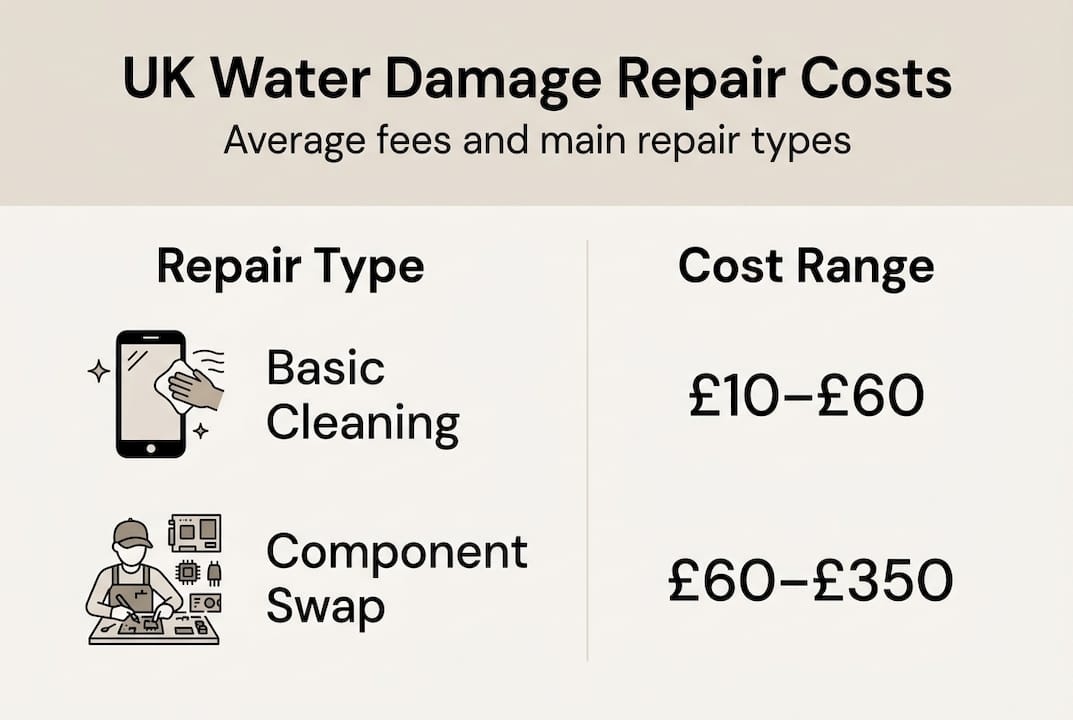
| Repair costs vary | UK professional costs range from £10 to £60 for minor cleaning and diagnosis to £90 to £350 for full logic board or motherboard repairs, depending on severity and model. |
| Free diagnosis offered | Many UK shops offer a free assessment that reveals whether you need a £60 port clean or a £300 board replacement, helping you decide between repair and replacement. |
| Saltwater costs higher | Saltwater damage typically costs 30 to 50 percent more than freshwater incidents due to the extensive cleaning required. |
| Immediate power off | Power off immediately to slow corrosion and prevent further short circuits. |
| Rice myth debunked | The rice method is ineffective and can introduce dust and starch into the device. |
Understanding water damage and repair costs
Water damage isn’t a single problem. It’s a spectrum ranging from minor moisture exposure that affects one component to catastrophic logic board corrosion that renders your device unusable. When liquid enters your phone, it creates short circuits, corrodes delicate connections, and leaves mineral deposits that interfere with electrical pathways. The severity depends on liquid type (fresh water versus saltwater versus sugary drinks), exposure duration, and how quickly you act.
UK professional water damage repair costs range from £10-£60 for minor cleaning and diagnosis to £90-£350 for full logic board or motherboard repairs, depending on severity and model. These figures reflect the complexity of modern smartphones, where water can affect multiple systems simultaneously. A simple charging port replacement might cost £50-£70, whilst extensive corrosion requiring component-level board repair pushes costs toward the upper range.
Apple’s out-of-warranty replacement service typically charges £250-£350 for water damaged iPhones, often exceeding what independent repair shops quote for actual fixes. Samsung and other Android manufacturers follow similar pricing structures through authorised service centres. The cost of phone repairs in the UK varies significantly based on several factors:
- Phone model and age: flagship devices cost more to repair due to expensive components
- Damage extent: surface moisture versus deep corrosion requires vastly different interventions
- Component availability: older models may have scarce parts, increasing labour and sourcing costs
- Repair shop location: London and major cities typically charge premium rates
- Liquid type: saltwater causes aggressive corrosion, requiring more extensive cleaning
| Repair Type | Cost Range | Typical Timeframe |
|---|---|---|
| Diagnosis and basic cleaning | £10-£60 | Same day |
| Charging port replacement | £50-£70 | 1-2 days |
| Screen replacement (if damaged) | £80-£200 | 1-2 days |
| Logic board micro-soldering | £90-£250 | 3-5 days |
| Full motherboard replacement | £150-£350 | 3-7 days |
Pro Tip: Request a free diagnosis before committing to repairs. Many UK shops offer complimentary assessments that reveal whether your phone needs a £60 port clean or a £300 board replacement, helping you make an informed financial decision about repair versus replacement.
Saltwater exposure presents particular challenges. The salt accelerates corrosion dramatically, often causing damage that progresses even after the phone appears dry. What seems like a minor beach incident can evolve into catastrophic failure within days as salt crystals continue corroding internal connections. Repairs for saltwater damage typically cost 30-50% more than freshwater incidents due to the extensive cleaning required.
Effective first aid for water damaged phones
The moments immediately after water exposure determine whether your phone survives or becomes an expensive paperweight. Contrary to popular belief, the rice bowl method introduces dust and starch particles into your device whilst providing minimal moisture absorption. Professional first aid guidance emphasises immediate action with proper drying techniques rather than folk remedies.
Follow these steps in order without skipping any:
- Power off immediately by holding the power button, even if the screen appears fine. Active electrical current accelerates corrosion and short circuits.
- Remove the SIM card tray, phone case, and any accessories. These trap moisture against vulnerable ports and openings.
- Wipe all exterior surfaces with a soft, lint-free cloth. Pay special attention to ports, speaker grilles, and button crevices.
- Position the phone vertically or at a slight angle to encourage water drainage from ports. Never lay it flat, as this traps liquid inside.
- Place the phone in an airtight container with multiple silica gel packets for 48-72 hours minimum. Silica gel absorbs up to 40% of its weight in moisture without leaving residue.
- Replace silica gel packets every 12-24 hours if possible. Fresh packets maintain maximum absorption efficiency.
- Resist the urge to check if the phone works during drying. Each power-on attempt risks permanent damage to partially dried components.
What you must avoid during first aid:
- Never shake or blow into the device. This forces water deeper into internal components.
- Don’t use heat sources like hairdryers, radiators, or microwaves. Heat warps delicate components and bakes corrosion into place.
- Avoid charging the phone until completely dry. Wet charging ports create short circuits that destroy charging circuitry.
- Don’t disassemble the phone yourself unless you have proper tools and experience. Modern smartphones use adhesives and delicate ribbon cables that break easily.
Pro Tip: Purchase silica gel packets in bulk and store them in an airtight container. When water damage strikes, you’ll have immediate access to proper drying materials rather than wasting critical hours searching for them or resorting to ineffective rice.
The 48-hour drying period feels interminable, but patience pays dividends. Moisture hiding in component layers and under shielding takes time to evaporate. Rushing this process by attempting to power on early causes more devices to fail than the original water exposure. Professional repair shops use specialised drying cabinets that maintain optimal temperature and humidity levels, but home drying with silica gel achieves similar results given sufficient time.
Even after thorough drying, internal corrosion may have already started. White or green residue on internal components indicates oxidation that will progressively worsen. This is why professional assessment remains valuable even after successful DIY drying, as technicians can identify and clean early-stage corrosion before it causes failure.
Professional repair options and what to expect
When DIY first aid isn’t enough, professional repair shops employ sophisticated techniques unavailable to home users. Specialist repair processes involve ultrasonic cleaning, isopropyl alcohol de-corrosion, and component testing with 70-97% success rates when addressed quickly. Understanding what professionals actually do helps you evaluate quotes and choose reputable services.
The professional repair process typically follows this sequence:
- Initial diagnostic testing to identify affected components and assess damage severity
- Complete disassembly using specialised tools to access all internal areas
- Ultrasonic cleaning bath with isopropyl alcohol solution to remove corrosion and mineral deposits
- Microscopic inspection of logic board traces and component connections
- Testing of individual components (battery, cameras, sensors, ports) to identify failures
- Micro-soldering to repair damaged board traces or replace corroded components
- Reassembly with new seals and adhesives
- Comprehensive functionality testing before return to customer
Success rates vary dramatically based on timing and damage type:
“We achieve a 97% recovery rate on devices brought to us within 24 hours of water exposure, dropping to around 70% for devices left untreated for several days as corrosion progresses.”
| Timeframe | Success Rate | Primary Challenge |
|---|---|---|
| Within 24 hours | 85-97% | Minimal corrosion, mainly moisture removal |
| 24-48 hours | 70-85% | Early-stage corrosion on exposed contacts |
| 2-7 days | 50-70% | Moderate corrosion affecting multiple components |
| Over 1 week | 30-50% | Severe corrosion, potential board trace damage |
| Saltwater exposure | 40-60% | Aggressive corrosion regardless of timing |
Even successful repairs come with limitations. Water damage repairs cannot fully restore original factory water resistance ratings. Manufacturers seal devices with precision adhesives and gaskets that cannot be perfectly replicated during reassembly. Your repaired phone will function normally but faces increased vulnerability to future water exposure. This reality makes the choice between repair and DIY approaches more nuanced than simple cost comparison.
Some damage proves uneconomical to repair. When corrosion destroys multiple expensive components simultaneously, or when the logic board requires extensive micro-soldering work, repair costs can exceed the phone’s current market value. A three-year-old mid-range Android phone worth £150 on the second-hand market doesn’t justify a £200 board repair. Reputable technicians will honestly advise when replacement makes more financial sense than repair.
Warranty implications matter too. Manufacturer warranties explicitly exclude water damage, even on phones marketed as water-resistant. Those IP68 ratings protect against specific conditions (typically 1.5 metres depth for 30 minutes in fresh water), not all liquid exposure. Third-party repairs generally void any remaining manufacturer warranty, though this matters less for water damaged devices already outside warranty coverage.
Choosing between repair and replacement
The repair versus replacement decision hinges on cold financial logic rather than emotional attachment. A systematic approach prevents overspending on repairs that don’t make economic sense. Professional guidance suggests replacing if repair costs exceed 50% of a new phone’s price, factoring in insurance coverage and post-repair water resistance loss.
Start by establishing your phone’s current market value. Check second-hand prices on reputable sites for your exact model and condition. A two-year-old flagship might retain £300-£400 value, whilst a three-year-old budget model may be worth only £80-£120. This baseline determines your repair budget ceiling.
Compare professional repair quotes against these benchmarks:
- If repair costs under 40% of current value, repair usually makes sense
- If repair costs 40-60% of current value, consider phone age and your upgrade timeline
- If repair costs over 60% of current value, replacement typically offers better value
- If repair costs exceed new phone prices for your model, replacement is clearly superior
Insurance changes the calculation significantly. Many UK mobile insurance policies cover accidental damage, including water exposure, with excess fees typically ranging from £50-£100. If you have coverage, claiming through insurance often proves cheaper than paying repair costs directly. Review your policy terms carefully, as some exclude water damage or impose claim limits.
| Option | Typical Cost | Advantages | Disadvantages |
|---|---|---|---|
| Professional repair | £90-£350 | Preserves data, familiar device, faster than replacement | Reduced water resistance, potential recurring issues, no warranty |
| Insurance claim | £50-£100 excess | Lowest out-of-pocket cost, may include replacement device | Affects no-claims bonus, policy limits, excess fees |
| Manufacturer replacement | £250-£350 | Factory refurbished quality, warranty included | Expensive, data loss, limited to same model |
| Buy new device | £200-£1000+ | Latest features, full warranty, fresh start | Highest cost, setup time, potential contract commitments |
| Buy refurbished | £150-£500 | Good value, warranty included, newer model possible | Data loss, setup required, variable quality |
Pro Tip: Back up your data immediately after successful DIY drying, before attempting professional repair or making replacement decisions. Even if the phone currently works, water damage can cause delayed failures. Having a recent backup eliminates data loss anxiety from your decision-making process.
Consider your Samsung water damage repair costs alongside broader factors. A phone you planned to replace in three months anyway doesn’t warrant expensive repairs. Conversely, a six-month-old flagship with two years of expected life remaining justifies higher repair investment. Your personal financial situation, environmental concerns about electronic waste, and specific phone features you rely on all influence the optimal choice.
The post-repair water resistance compromise deserves serious weight in your decision. If you frequently use your phone near water, during outdoor activities, or in challenging environments, the reduced protection after repair creates ongoing risk. Future water exposure could cause immediate failure where the original device would have survived. This vulnerability effectively shortens your repaired phone’s practical lifespan compared to a new water-resistant device.
How Buy2fix can help with phone repairs
Navigating water damage repairs becomes simpler with access to quality parts, expert guidance, and cost-effective solutions. Buy2Fix supports both DIY enthusiasts and those seeking professional services through comprehensive repair resources and genuine replacement components. Whether you’re attempting your own repair or need professional intervention, having reliable sources for parts and advice makes the difference between successful restoration and wasted effort.
Our smartphone repair services provide UK customers with affordable alternatives to manufacturer pricing whilst maintaining quality standards. Free diagnosis services help you understand exactly what your water damaged phone needs before committing to expensive repairs. This transparency lets you make informed decisions based on actual damage assessment rather than guesswork.
For DIY repairs, Buy2Fix offers:
- Genuine and high-quality aftermarket replacement parts for all major phone brands
- Detailed repair guides with step-by-step instructions
- Specialised tools and repair kits designed for water damage restoration
- Technical support to answer questions during your repair process
Our comprehensive cost guides help you budget appropriately and compare DIY versus professional repair expenses. With free UK mainland shipping and a 30-day return policy, you can source quality components without the risk of being stuck with incorrect parts. The one-year warranty on parts provides additional peace of mind that DIY repairs won’t fail due to component quality issues.
Frequently asked questions
What is the average cost to fix a water damaged phone in the UK?
Professional water damage repairs in the UK typically cost between £10-£350 depending on severity. Basic cleaning and diagnosis runs £10-£60, charging port repairs cost £50-£70, whilst extensive logic board repairs requiring micro-soldering range from £90-£350. Your specific cost depends on phone model, damage extent, and which components need replacement.
Can I fix water damage myself or should I use a professional?
You can perform initial first aid (powering off, drying with silica gel) yourself with good success rates. However, internal cleaning, corrosion removal, and component replacement require specialised tools and expertise. Attempting complex DIY repairs without experience risks causing additional damage. Professional services achieve 70-97% success rates when addressed quickly, making them worthwhile for valuable devices.
How quickly must I act after water damage occurs?
Immediate action is critical. Power off your phone within seconds of water exposure to prevent short circuits. Begin drying within the first hour for best results. Professional repairs performed within 24 hours achieve 85-97% success rates, dropping to 50-70% after several days as corrosion progresses. Every hour of delay reduces your chances of full recovery.
Will my phone insurance cover water damage repairs?
Many UK mobile insurance policies cover accidental damage, including water exposure, though coverage varies by provider. Check your specific policy terms, as some exclude water damage or classify it separately. Excess fees typically range from £50-£100, often cheaper than paying full repair costs. Some policies impose annual claim limits or affect your no-claims discount.
Does repairing water damage restore my phone’s water resistance?
No, repairs cannot fully restore original factory water resistance ratings. Manufacturers use precision adhesives and gaskets that cannot be perfectly replicated during reassembly. Your repaired phone will function normally but faces increased vulnerability to future water exposure. If you frequently use your phone near water, this limitation should factor heavily into your repair versus replacement decision.
Why shouldn’t I use rice to dry my water damaged phone?
Rice is ineffective for drying phones and introduces harmful dust and starch particles into ports and openings. Rice absorbs moisture slowly and incompletely compared to silica gel packets, which absorb up to 40% of their weight in water without leaving residue. Professional repair technicians consistently advise against rice, recommending silica gel and proper air circulation instead for effective moisture removal.
Recommended
Let customers speak for us
I ❤️ love it, it's absolutely amazing I'm sooo happy 😊

Great

I saw this item and it was just what I was looking for. I found it here but not in Amazon or e-bay. However, it was in UK, I was surprised to find that they were able to ship it to the US. Excellent company, would do business with again

This is great for when out and about, to sharpen either coloured pencils, or watercolour pencils….would order again.

Great items would bye again

I have purchased several items from this store before. Recently, I encountered an issue with my latest order. After reporting the problem to customer support, they were consistently attentive and made every effort to resolve the situation. Upon investigation, they acknowledged the issue and promptly fixed it. This experience has increased my level of trust in this store.
Thank you so much. I'm so happy.

très bien

BC70 Car Bluetooth 5.0 FM Transmitter Radio Adapter Dual Display Wireless Handsfree Call MP3 Music Player QC3.0 PD USB Charger

A quite sturdy cover, if you are looking for full protection and a more business-like style, this cover perfectly fulfills its purpose.
The shipping was fast, and it was delivered in perfect condition.

For LG TV Bluetooth Handheld Infrared Voice Multi-Function Remote Control(AKB75855501)

Tusen tack för bästa service och produkt som jag vänlig önskar dig tack

Works correctly and no issues so far

Took a while to get here but it was all good, watch looks brand new after replacement

What a fantastic 👏🏻 stylish case that has helped my phones temperature in the heatwave!!
Perfect 👌🏻 also it's cool as f##k
