

Benefits of mobile device repair: your complete guide
TL;DR:
- Repairing a smartphone offers significant cost savings, often extending device lifespan and reducing environmental waste. Professional repairs with quality parts provide reliable results and faster turnaround times compared to DIY attempts. Choosing repair over replacement supports sustainability and preserves your familiar device, especially if it’s younger than five years old.
Most people face the same decision several times a decade: your phone screen cracks, your battery barely lasts until noon, or the charging port starts playing up. Do you spend £40 on a repair or drop £800 on a new handset? The benefits of mobile device repair go well beyond the obvious cost saving. Choosing to fix rather than replace protects your wallet, extends the life of a device you already know, and cuts down on the growing mountain of discarded electronics that nobody talks about enough.
Table of Contents
- Key takeaways
- 1. The real cost savings of mobile device repair
- 2. Extending your device’s lifespan through targeted repairs
- 3. Environmental benefits you should know about
- 4. The quality and convenience advantages of professional repair
- 5. Addressing common repairable smartphone issues affordably
- 6. Comparing repair versus replacement: making an informed decision
- My honest perspective on repair versus replace
- Get reliable repair parts from Buy2fix
- FAQ
Key takeaways
| Point | Details |
|---|---|
| Significant cost savings | Repairing a device typically costs a fraction of buying a new equivalent model. |
| Extended device lifespan | Targeted repairs to screens, batteries, and ports can add years of useful life. |
| Reduced environmental impact | Fixing devices keeps functioning electronics out of landfill and lowers e-waste. |
| Professional quality repairs | Skilled technicians using quality parts deliver reliable results, often backed by a warranty. |
| Smarter decision-making | Weighing repair cost against expected lifespan extension helps you choose confidently. |
1. The real cost savings of mobile device repair
The most immediate benefit people notice is the price difference. A screen replacement for a mid-range Samsung Galaxy typically costs between £60 and £120 at a reputable repair shop. The same model bought new sits anywhere from £350 to £600. That gap is not trivial.
It helps to think in terms of value over time rather than headline price. If a £90 repair keeps your device running well for another 18 months, you are paying roughly £5 per month to stay on your current handset. A new phone on a monthly contract costs considerably more.
There are also ways to soften the upfront cost of repair. Some credit cards include cellphone protection cover, reimbursing repair or replacement costs within roughly ten business days after a claim is approved. If your card or home contents insurance includes gadget cover, your out-of-pocket expense could be minimal.
Key costs worth comparing before you decide:
- Repair quote from a qualified technician
- Cost of a certified refurbished equivalent device
- Remaining contract or finance payments on your current phone
- Accessories you would need to replace (cases, chargers, cables)
Pro Tip: Always ask for three separate repair quotes and, for each one, request the warranty length, total cost including parts, and estimated turnaround time. These three figures tell you far more than price alone.
2. Extending your device’s lifespan through targeted repairs
A modern smartphone is built to last, but wear and tear affects specific components long before the core hardware becomes obsolete. Knowing which parts are most commonly repaired helps you judge whether your device has useful life left.
The most frequent repairs professionals handle include:
- Screen replacements: Cracked glass or unresponsive touchscreens are the most common issue and usually the most straightforward to fix.
- Battery replacements: Lithium-ion batteries degrade noticeably after 500 to 800 charge cycles. Swapping the battery is one of the highest-return repairs you can make.
- Charging port repairs: A worn or damaged USB-C or Lightning port is rarely a sign that the phone is dying. It is usually a £30 to £60 fix.
- Camera module replacements: Blurry or malfunctioning cameras are almost always a hardware issue, not a sign the phone needs replacing.
Beyond hardware, keeping your software updated and avoiding extreme temperatures significantly extends lifespan. You can find practical day-to-day strategies in this guide on extending your phone’s lifespan.
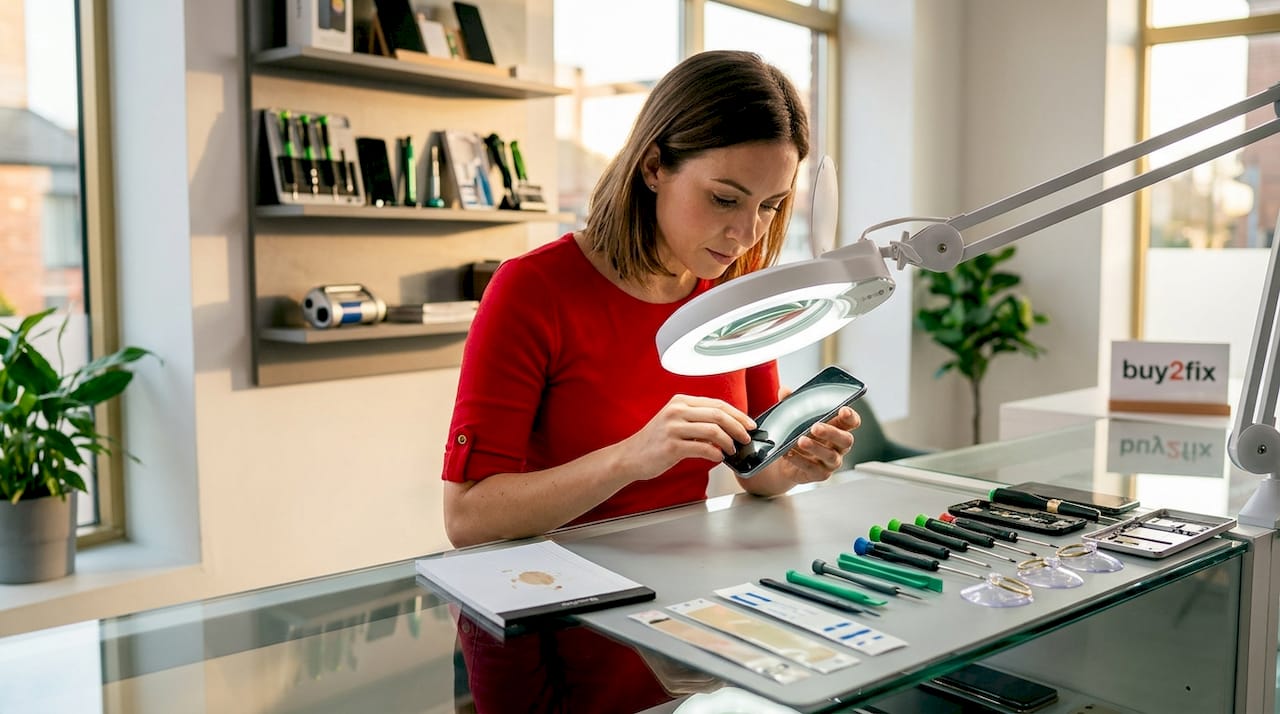
One point that often gets overlooked: the quality of parts used in a repair matters as much as the skill of the technician. Genuine or high-grade compatible parts perform better and last longer than cheap substitutes. Professional repair services using quality components extend device life while reducing the likelihood of a follow-up repair.
3. Environmental benefits you should know about
The scale of discarded electronics is genuinely alarming. Nearly two-thirds of consumer electronics are thrown away while still functional or repairable. What is most striking is that battery issues and limited repair access are the primary drivers of this waste.
| Factor | Repair | Replacement |
|---|---|---|
| Carbon footprint | Low: no new manufacturing | High: significant production emissions |
| Raw material use | Minimal | Substantial (rare earth metals, plastics) |
| E-waste contribution | None | Adds to growing global problem |
| Energy consumption | Small | Large (manufacturing and shipping) |
Choosing repair supports the circular economy. Rather than extracting new raw materials to manufacture a replacement, repair keeps existing resources in use longer. This is why initiatives like the UK’s Right to Repair regulations, which came into force in 2021, are significant. They legally require manufacturers to make spare parts available to independent repairers, making it easier and more affordable for consumers to fix rather than discard.
Repairing phones directly reduces demand for new device production, which is one of the most resource-intensive manufacturing processes in consumer electronics. For more on how repair choices affect sustainability, Buy2fix has written in depth about eco-friendly phone repairs.
4. The quality and convenience advantages of professional repair
There is a common worry that repairs are risky. “What if it makes things worse?” In practice, that concern mostly applies to poorly-sourced parts or unqualified technicians, not to professional mobile repair services with a track record.
Professional technicians bring several concrete advantages:
- Specialised tools: Opening a modern iPhone or Samsung Galaxy without the right tools risks damaging ribbon cables, adhesive seals, and waterproofing. Professionals have the equipment to do this safely.
- Warranty on repairs: Reputable repair shops typically offer 90 days to 12 months warranty on parts and labour. If the repair fails, you are covered.
- Faster turnaround: Screen and battery replacements usually take one to two hours in-store. That is your phone back the same day.
- Insurance assistance: Many repair services will help you navigate insurance or credit card claims, reducing the administrative burden on your end.
- Data security: A professional repairer should not need access to your personal data for most hardware repairs. Ask about their data handling policy before you hand over your device.
The mobile repair expertise benefits become particularly clear when you compare a competent professional repair to a rushed DIY attempt on an unfamiliar device. The risk of a botched DIY job introducing new faults often outweighs any saving.
5. Addressing common repairable smartphone issues affordably
One of the least appreciated advantages of phone repair is how many issues that feel catastrophic are actually routine fixes. Understanding what is commonly repairable removes much of the anxiety around device damage.
A cracked screen feels devastating when it happens, but screen replacements are the most practised repair in the industry. Water damage, which many people assume is a write-off, can often be recovered if the device is treated quickly and professionally. Microphone and speaker faults, button failures, SIM tray issues and even motherboard-level problems are all within scope for an experienced technician.
You can get a clearer picture of how frequently these issues arise and what they cost to fix by looking at Buy2fix’s breakdown of common smartphone issues. Having this information before your device develops a problem means you will not panic-buy a replacement when a £50 repair would do the job.
6. Comparing repair versus replacement: making an informed decision
Not every repair makes financial sense. There are situations where replacement is the right call, and it is worth being clear-eyed about both options.
The key decision factors to weigh up:
- Repair cost as a percentage of replacement cost: If the repair costs more than 50% of a comparable refurbished device, the maths starts to favour replacement.
- Device age and software support: If your phone is no longer receiving security updates from the manufacturer, no repair will fix that. Check how long your model is supported before committing to a repair.
- Expected lifespan after repair: Repair only makes strong sense if the device will serve as your primary phone for at least 12 more months.
- Hidden costs of replacement: A new device means transferring data, buying a new case, potentially updating accessories, and the time and inconvenience involved. These costs rarely appear in price comparisons.
| Consideration | Repair | Replacement |
|---|---|---|
| Upfront cost | Low to moderate | High |
| Familiar device and settings | Yes | No: setup time required |
| Latest hardware features | No | Yes |
| Environmental impact | Low | High |
| Risk of new faults | Low (with professional repair) | Very low |
| Warranty | Repair warranty (90 days to 1 year) | Full manufacturer warranty |
For a detailed UK-specific breakdown, Buy2fix’s guide on repair vs replacement costs is worth reading before you make any decision.
Pro Tip: Before approving any repair, ask for the warranty length on parts and labour, the total cost including any diagnostic fee, and the expected turnaround time. Comparing these three numbers across multiple quotes gives you the clearest picture of value.
My honest perspective on repair versus replace
I’ve seen hundreds of conversations about whether to repair or replace, and the same mistake comes up repeatedly. People treat repair as a sign of settling for less, when in practice the opposite is often true. The device you already own is broken in and configured exactly the way you want it. Starting fresh with a new phone takes more time and energy than most people budget for.
What I’ve also noticed is that concerns about repair reliability usually come from one bad experience or second-hand advice, not from dealing with a qualified professional. The industry has matured significantly. Reputable shops offer real warranties, use quality parts, and stand behind their work.
The environmental angle is the one I think gets underweighted most. Nearly two-thirds of discarded electronics still work or have minor faults. That is not an abstract statistic. It represents millions of functioning devices entering landfill because repair felt too complicated or expensive. Every phone that gets fixed instead of binned is a genuinely meaningful choice.
My practical advice: if your device is under five years old, receives software updates, and the repair costs less than 40% of a comparable replacement, repair it. The benefits of phone fixing go beyond the money you save today.
— Adewale
Get reliable repair parts from Buy2fix
If you are ready to repair rather than replace, Buy2fix stocks an extensive range of mobile device repair parts for iPhone, Samsung Galaxy, Huawei, Xiaomi, OPPO, and more. Whether you are a DIY repairer tackling your first screen replacement or a professional technician sourcing parts in bulk, you will find quality-checked components at fair prices. Buy2fix offers free UK mainland shipping, a 30-day return policy, and warranty support on eligible items, so you can repair with confidence. Choosing Buy2fix means getting the parts you need quickly, without overpaying or compromising on quality.
FAQ
How much money can I save by repairing my phone?
Repairs typically cost 10% to 30% of the price of a new equivalent device. A screen replacement for a popular model usually runs between £60 and £150, compared to £400 or more for a replacement phone.
Is it worth repairing an older smartphone?
It depends on whether the device still receives software security updates and how long you plan to use it. A repair makes strong value sense if the phone will remain your primary device for at least 12 months after the fix.
Does repairing a phone help the environment?
Yes. Repair avoids the significant carbon footprint and raw material use associated with manufacturing a new device. Limited repair options are one of the main causes of premature device disposal and rising e-waste.
Are professional repairs better than DIY?
For most people, yes. Professional repair services use specialised tools, quality parts, and provide warranties on their work, which reduces the risk of follow-up faults that DIY attempts can introduce.
Can my credit card help cover repair costs?
Some credit cards include cellphone protection policies that reimburse repair costs, subject to a deductible and claim terms. Check your card benefits before paying for a repair out of pocket.
Recommended
Let customers speak for us
I ❤️ love it, it's absolutely amazing I'm sooo happy 😊

Great

I saw this item and it was just what I was looking for. I found it here but not in Amazon or e-bay. However, it was in UK, I was surprised to find that they were able to ship it to the US. Excellent company, would do business with again

This is great for when out and about, to sharpen either coloured pencils, or watercolour pencils….would order again.

Great items would bye again

I have purchased several items from this store before. Recently, I encountered an issue with my latest order. After reporting the problem to customer support, they were consistently attentive and made every effort to resolve the situation. Upon investigation, they acknowledged the issue and promptly fixed it. This experience has increased my level of trust in this store.
Thank you so much. I'm so happy.

très bien

BC70 Car Bluetooth 5.0 FM Transmitter Radio Adapter Dual Display Wireless Handsfree Call MP3 Music Player QC3.0 PD USB Charger

A quite sturdy cover, if you are looking for full protection and a more business-like style, this cover perfectly fulfills its purpose.
The shipping was fast, and it was delivered in perfect condition.

For LG TV Bluetooth Handheld Infrared Voice Multi-Function Remote Control(AKB75855501)

Tusen tack för bästa service och produkt som jag vänlig önskar dig tack

Works correctly and no issues so far

Took a while to get here but it was all good, watch looks brand new after replacement

What a fantastic 👏🏻 stylish case that has helped my phones temperature in the heatwave!!
Perfect 👌🏻 also it's cool as f##k
